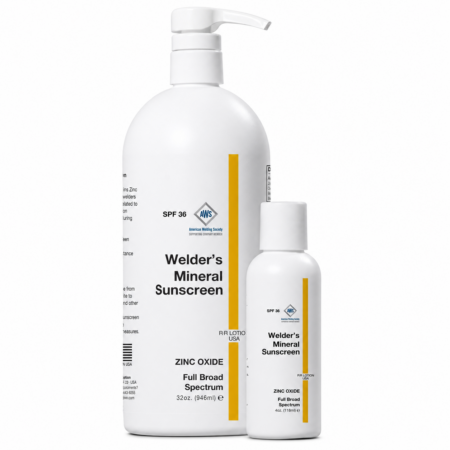
A Zinc Oxide Sunscreen for Welders That offers Protection against Heat Stress and ARC UV Radiation
Using Crush Rock Protection “Zinc Oxide” against Skin Cancer
By: Richard Rich
For Welders, skin protection is about more than avoiding Sunburn. In the welding Environment, workers are exposed not only to heat, sparks, metal, and demanding jobsite conditions, but also to Ultraviolet Radiation produced by the Welding Arc.
A welding arc can emit intense UVA and UVB radiation, which can cause Arc Burns, skin redness, irritation, and long-term skin damage. This exposure is especially concerning in shops, field repairs, fabrication areas, maintenance departments, farms, garages, and other real-world working environments where welding may happen quickly, casually, or without perfect safety controls in place.
Proper PPE should always come first. Welding jackets, gloves, helmets, face shields, sleeves, and protective barriers are the first line of defense. But in the real world, PPE is not always worn perfectly, skin is not always fully covered, and people standing nearby—such as supervisors, managers, inspectors, helpers, or other workers in the immediate vicinity—may still be exposed to reflected or scattered UV radiation from the arc. It’s important to use Physical Mineral Sunscreen on the face, ears, neck, wrists, and other exposed skin where helmets and clothing may leave gaps.
That is why sunscreen is an important added layer of protection for welders and the people working around them.
At R&R Lotion, our mission has always been to support the safety, wellness, and skin health of hardworking people. We care about the workers who build, repair, weld, fabricate, maintain, and keep industries moving. That is why, in the 1990s, we made the deliberate decision to use Zinc Oxide, a Mineral-based (Zinc Oxide) Sunscreen active ingredient, instead of chemical filters like Avobenzone.
That choice was not about chasing a trend. It was about choosing a safer, smarter, and more practical sunscreen active for high-heat, high-exposure, blue-collar working environments.
Avobenzone: How Chemical Sunscreens Can Add to Heat Stress
Avobenzone is one of the most common chemical sunscreen ingredients used for UVA protection. It works by absorbing ultraviolet radiation. When UV radiation is absorbed, the chemical sunscreen molecule becomes energized. As that energy is released, it is converted into heat on or near the skin’s surface.
This may help reduce UV damage, but it can also contribute to thermal buildup on the skin (Heat Stress). For welders already dealing with heat from the welding arc, hot metal, grinding, fabrication, outdoor job sites, protective clothing, and demanding physical labor, adding more heat to the skin is dangerous.
In high-heat working conditions, every layer matters. A sunscreen should help protect the worker without adding unnecessary heat stress.
Chemical sunscreen filters like Avobenzone also come with several practical concerns. Because they need to absorb into the skin for 20 minutes, they are typically recommended to be applied before exposure, so they have time to activate. For a welder, mechanic, fabricator, maintenance worker, or manager walking into a welding area, that is not always realistic.
Avobenzone is also photo-unstable, meaning it can begin to break down when exposed to UV radiation. As it degrades, its ability to absorb UVA radiation can decline, which may reduce protection over time. This is one reason chemical sunscreens require frequent reapplication to maintain coverage (FDA recommends every 2 Hours)
Another concern is that Avobenzone does not provide complete UVB protection by itself, so it usually has to be combined with other chemical sunscreen actives to achieve broad-spectrum coverage. This increases formulation complexity and places more chemical ingredients on the skin in the body.
In demanding welding environments, workers need sunscreen that is simple, stable, immediate, and dependable.
Avobenzone can also create issues in hot storage conditions. If it is not properly stabilized in the formula, it may crystallize over time, especially when exposed to heat, such as in a truck, toolbox, welding rig, service vehicle, or hot shop. This can affect performance and may also contribute to staining, including yellow staining on clothing.
For welders and workers who need consistent, non-irritating protection in high-heat environments, these drawbacks matter.
Spray Sunscreens, Alcohol Solvents, and Welding Environments
Not all sunscreens are appropriate around welding work.
Some sunscreen products, especially aerosol spray sunscreens, may contain alcohol or other solvent-based ingredients. These ingredients can be flammable or combustible, especially when sprayed into the air or used near sparks, flame, hot metal, grinding, cutting, or welding operations.
That is a major concern in the welding environment.
The sunscreen used around welders should not create additional risk. Workers should avoid spraying alcohol-based or aerosol sunscreen products near an active welding area, open flame, sparks, or hot surfaces. In these settings, a lotion-based mineral sunscreen is a smarter and more practical choice.
A Welder’s Formulated Sunscreen should support safety, not complicate it.
Zinc Oxide Offers Immediate Stable Protection
Unlike chemical sunscreen filters, Zinc Oxide is a Physical Mineral Sunscreen Active. It is made from a naturally occurring mineral—essentially a refined mineral powder, often described simply as crushed rock. Instead of absorbing UV radiation and converting it into heat, Zinc Oxide sits on the surface of the skin and helps reflect and scatter UV rays.
This difference is important for Welders.
A welding arc produces UV radiation that can burn exposed skin. Zinc Oxide forms a protective mineral barrier on the skin, helping defend against UVA and UVB exposure without relying on a chemical reaction within your body.
Because Zinc Oxide does not need to absorb into the skin to work, it provides immediate protection upon application. A welder, helper, foreman, manager, inspector, or maintenance worker may not always have twenty minutes to wait before entering a work area.
Zinc Oxide is also Naturally photostable, meaning it does not break down quickly when exposed to UV radiation. That makes it a reliable choice for long workdays, high-heat environments, and jobs where workers may be exposed to sun, arc radiation, reflected UV RAYS, and heat throughout the day.
In simple terms:
Chemical Sunscreens absorb UV Rays and release heat within your Body.
Zinc Oxide Sunscreens reflects and scatters up to 90% of UV Rays before they enter your body that can cause Heat Stress.
For Welders and Blue-Collar workers dealing with Hot Environments, that cooler, more stable approach makes sense.
Why R&R Lotion Chose Zinc Oxide in the Early 1990’s
R&R Lotion chose Zinc Oxide because it aligned with our values: worker safety, skin health, product performance, and real-world practicality.
We wanted an active Sunscreen ingredient that made sense for people who work in UV Ray Environments. Blue-Collar Workers in welding, fabrication, construction, utilities, transportation, maintenance, manufacturing, mining, agriculture, and other demanding trades need mineral sunscreen that performs in these conditions.
A sunscreen formulated for the welding environment has to do more than look good on a label. It has to work in the real world.
By choosing Zinc Oxide, R&R Lotion provides Sunscreen protection that:
- Works immediately upon application No Waiting 20 minutes for Absorption
• Provides Broad-Spectrum UVA and UVB Protection
• Helps protect against UV exposure from the Sun and Welding Arc Radiation
• Does not rely on a chemical heat reaction
• Stays stable in high-heat working Environments
• Helps reduce irritation of sensitive skin
• Rubs into the Skin leaving No white residue
• Supports added protection for nearby personnel
In welding environments, sunscreen is not a replacement for PPE. It should never be treated as the only form of protection. But it can be an important added layer of defense for exposed skin, especially for workers who may not realize how much UV radiation a welding arc can produce.
A Smarter Approach to Skin Protection for Welders and Blue-Collar Co-Workers
Welders know heat. They know sparks, steel, long shifts, tight spaces, and tough working conditions. But many workers do not always think about the UV radiation coming from the welding arc. That exposure can cause burns and skin damage, even when the worker is not outside in direct sunlight.
That is why Zinc Oxide Sunscreen should be part of Health & Safety Concerns
In perfect conditions, every worker would always be fully covered, every weld area would be properly shielded, and everyone nearby would have complete PPE. But in the real-world blue-collar environments, field repairs, job sites, farms, garages, maintenance areas, and do-it-yourself welding situations—that does not always happen.
Sunscreen gives welders and nearby personnel an additional layer of protection for exposed skin.
Zinc Oxide offers a cleaner, more direct approach. It is a mineral barrier that helps reflect and scatter UV radiation. It works immediately, stays stable, and does not depend on a heat-producing chemical reaction.
At R&R Lotion, we believe in protecting the people who keep America working. The Welders. The fabricators. The mechanics. The builders. The maintenance crews. The managers walking the floor. The Blue-Collar workers who power our communities, industries, and infrastructure.
That is why we Chose Micro fine Crush Rock “Zinc Oxide”.
Because protecting skin in tough working environments should be simple, stable, and smart.
and why we’ve formulated our Sunscreen protection around it.