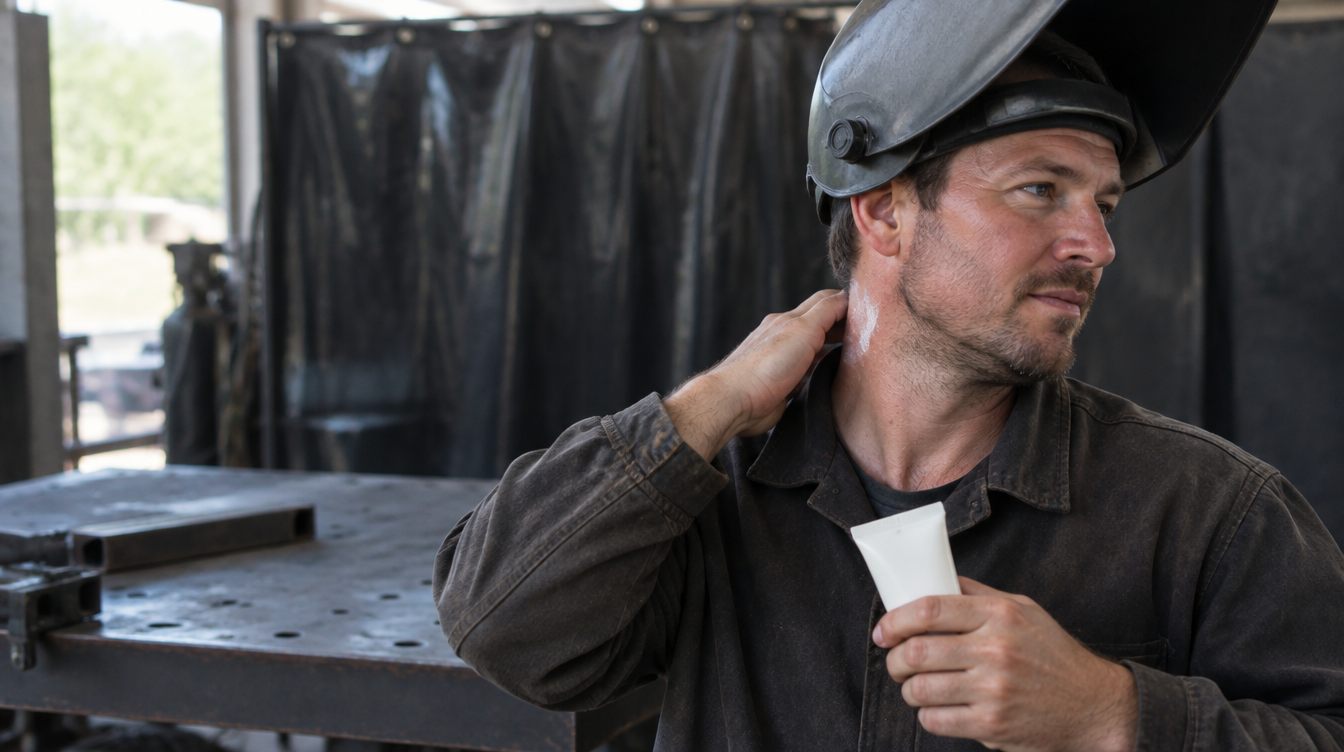
Every welder knows the feeling. You get home after a long day in the booth and the back of your neck is red and hot. Maybe the tops of your ears too, or a stripe on your wrist between the glove and the sleeve. You were never outside. That is arc burn, and it happens to the skin your hood and leathers leave open.
This post covers where the arc reaches, why it matters over a career, and how to cover the gaps before you strike an arc.
Where the arc gets you
A welding arc gives off strong ultraviolet (UV) radiation. Your helmet and lens protect your eyes and face from the direct light. The rest of you is up to your clothing.
UV also bounces. WorkSafe Victoria, the workplace safety regulator in Victoria, Australia, notes that welding UV can reflect off hard, smooth surfaces near the welder. Bright metal, light walls and the table all throw it back at you. That reflected UV finds skin the hood does not cover:
- The back and sides of the neck, at the collar gap.
- The ears, especially under a cap or with the hood tipped up.
- The wrists, between the glove cuff and the sleeve.
- The throat and upper chest, if your jacket is open.
- Your lips and the lower face, when the hood sits high or you are fitting with it up.
Fitters, helpers and anyone working near the arc get it too, even when they are not welding.
Why it matters over a career
A red neck after one shift feels like a sunburn and fades in a few days. The bigger problem is what adds up. WorkSafe Victoria says UV from welding can burn unprotected skin, and that continuous or repeated exposure over many years may cause skin cancer.
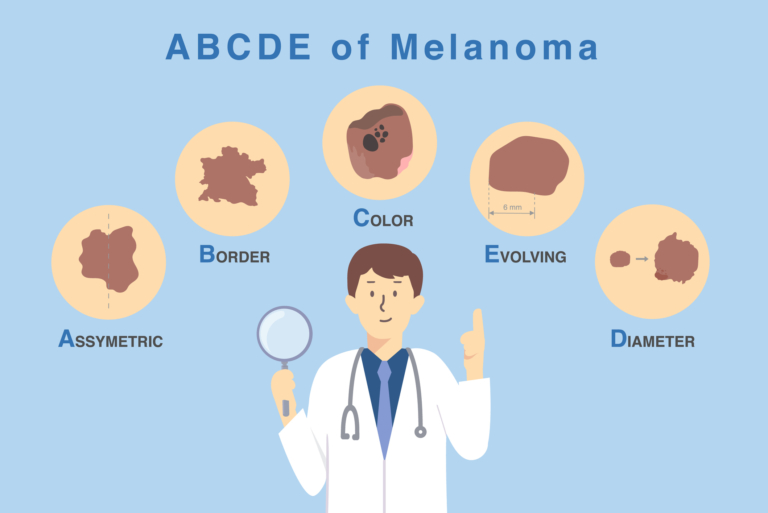
Skin cancer is one of the few cancers you can usually see. Check your neck, ears and hands, and have someone check the places you cannot see. Watch moles for changes in shape, border, color or size. If a spot changes, see a dermatologist.
Clothing and screens come first
Sunscreen is not your first line of defense in a booth. WorkSafe Victoria lists the main controls:
- Fire-retardant clothing suited to welding, such as welding jackets and pants.
- Neck protection and welding gloves for skin other clothing does not cover.
- Non-flammable welding curtains or screens to protect people nearby.
- The right helmet and lens for the job.
Button the collar. Use a hood with a neck flap or a welding bib. Pull your sleeves over your glove cuffs. Then use sunscreen for whatever skin is still open.
Sunscreen for the gaps
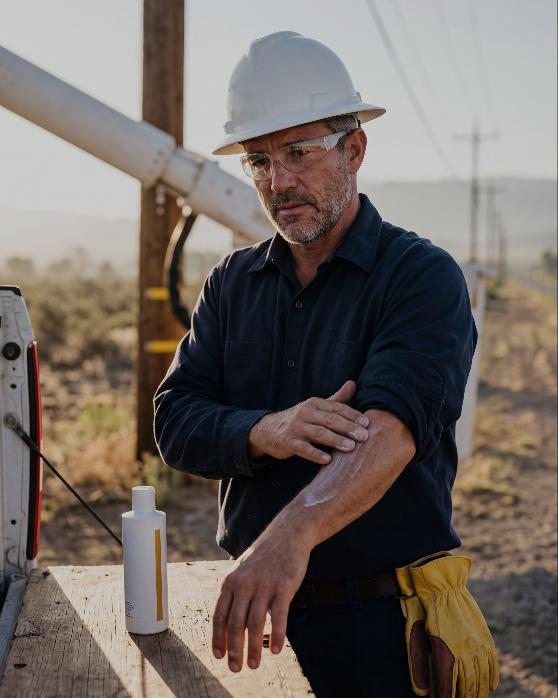
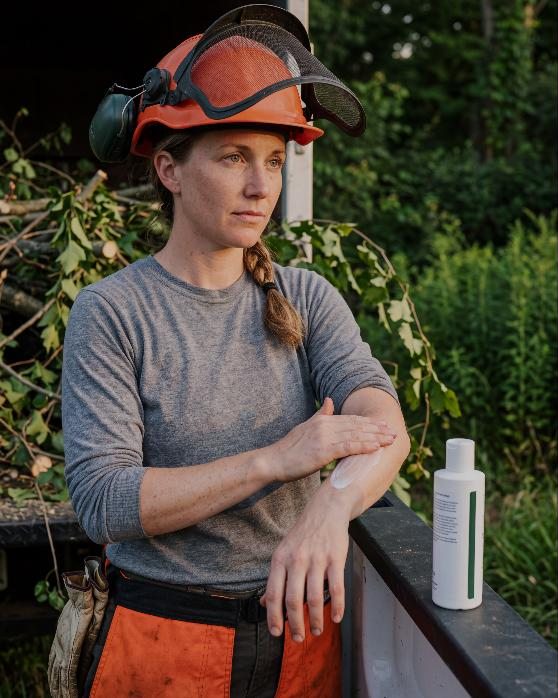
Dermatologists say to cover the face, neck and ears, and any skin clothing does not cover. In a booth, that means the collar gap, the ears and the wrists. The American Academy of Dermatology says sunscreen takes about 15 minutes to absorb and protect, and should be reapplied every two hours and right after sweating.
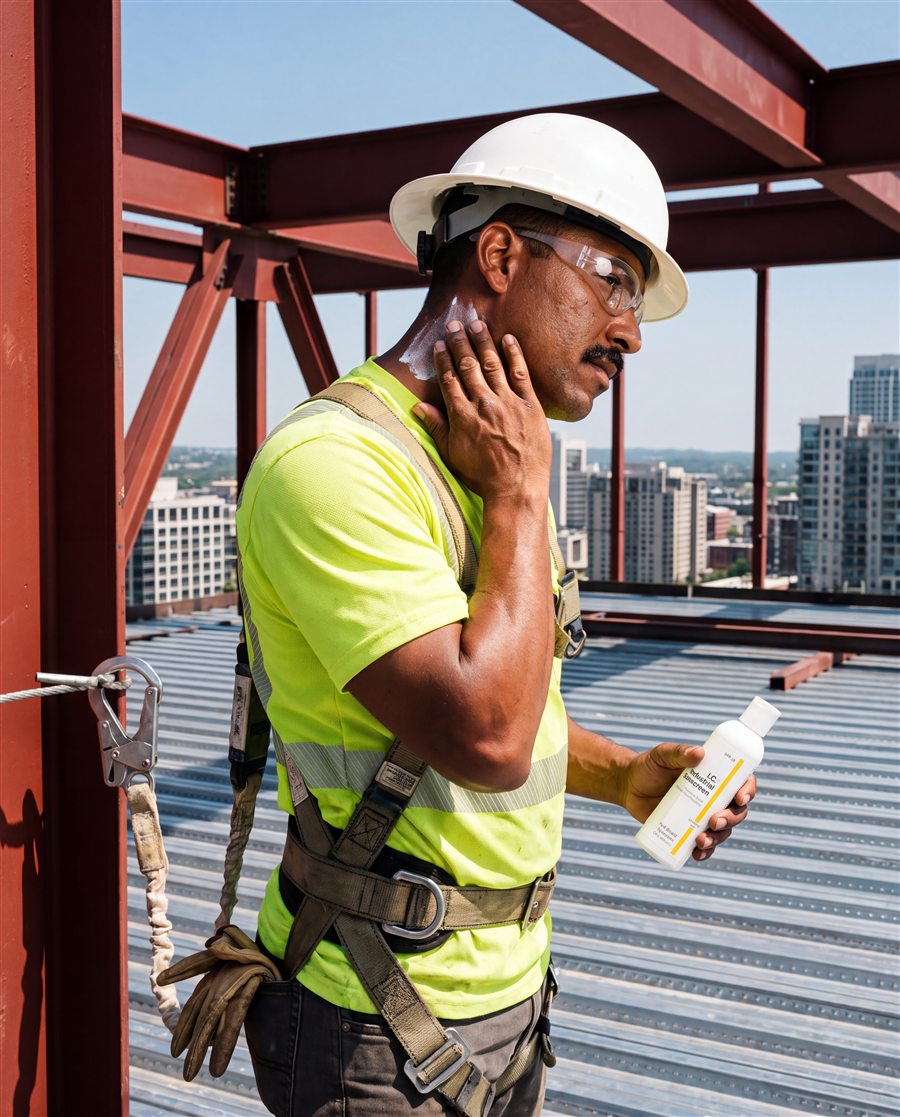
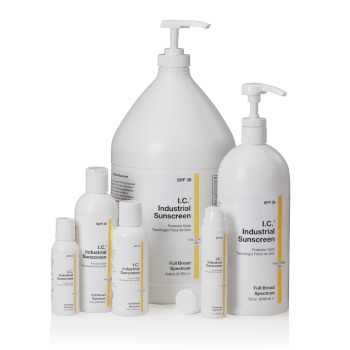
We make I.C. Industrial Sunscreen SPF 36 for the skin your PPE leaves open. It is a hybrid sunscreen: non-nano zinc oxide plus organic UV filters. It gives full broad-spectrum UVA/UVB protection, SPF 36, and is 80-minute sweat and water resistant. It contains no avobenzone; its UVA protection comes from the mineral zinc oxide. It is a lotion, not an aerosol, and it rubs in clear, is fragrance-free and stays put so it will not run into your eyes under the hood.
One point to be clear on: sunscreen is tested and labeled for UVA and UVB. It is one layer of protection. It does not replace FR clothing, the right lens shade or a neck flap.
The FDA’s broad-spectrum statement sums up how sunscreen fits in: used as directed with other sun protection measures, a broad spectrum SPF 15 or higher sunscreen helps reduce the risk of skin cancer and early skin aging caused by the sun.
Do not forget your lips
Lips get missed by almost everyone. They sit right at the hood line when you lift it to check a bead. The American Academy of Dermatology says to use a lip balm with an SPF of at least 30.
I.C. Sunscreen Lip Balm comes in SPF 30 (zinc oxide, vanilla) and SPF 15 (lime burst). Pick the SPF 30 to match the dermatologists’ advice. It is a sun-rated lip balm, so treat it like your sunscreen: put it on before the shift and again on breaks.
When to put it on
- Before the shift. Apply sunscreen to the back of the neck, the ears, the face and the wrists, about 15 minutes before you strike an arc. Lip balm too.
- Every break. Reapply at least every 2 hours.
- After heavy sweating. Reapply after 80 minutes of sweating and right after you towel off.
- End of shift. Wash up, and check your neck and ears in the mirror. Redness means something got through. Close that gap tomorrow.
Read the Drug Facts on the label for full directions. For more on what the arc does to skin, see our sunscreen for welders page and Field Notes: Welding and Arc UV.
FAQ
Can I get sunburned from welding indoors?
Yes. A welding arc gives off strong UV, and it reflects off nearby hard, smooth surfaces. WorkSafe Victoria says UV from the arc or reflected off metal can burn unprotected skin.
Does sunscreen replace my FR jacket or neck flap?
No. Clothing, screens and the right helmet come first. Sunscreen covers skin your PPE leaves open. It is tested and labeled for UVA and UVB, not for any specific arc exposure.
Why use a lip balm with SPF?
Lips burn like any other skin, and they sit right at the edge of the hood. The American Academy of Dermatology recommends lip balm with an SPF of at least 30.
Sources
- WorkSafe Victoria, Controlling exposure to ultraviolet (UV) radiation when welding (reflected UV, skin burns, skin cancer, controls): https://www.worksafe.vic.gov.au/controlling-exposure-ultraviolet-uv-radiation-when-welding
- OSHA, Welding, Cutting, and Brazing: Hazards and Solutions (UV radiation among welding health hazards): https://www.osha.gov/welding-cutting-brazing/hazards-solutions
- American Academy of Dermatology, How to apply sunscreen (face, neck, ears; 15 minutes; reapply every two hours; lip balm SPF 30): https://www.aad.org/public/everyday-care/sun-protection/shade-clothing-sunscreen/how-to-apply-sunscreen
- U.S. FDA, Sunscreen: How to Help Protect Your Skin from the Sun (broad spectrum SPF 15+, water resistance, reapplication): https://www.fda.gov/drugs/understanding-over-counter-medicines/sunscreen-how-help-protect-your-skin-sun
- R&R Lotion product labels: I.C. Industrial Sunscreen SPF 36 Drug Facts (zinc oxide 7.02%, octinoxate 6.00%, benzophenone-3 4.70%, octisalate 4.00%); I.C. Sunscreen Lip Balm SPF 30 (zinc oxide 10.5%) and SPF 15.