





Sun Safety & Skin Cancer
The Gaps in Your Hood: Neck, Ears and Lips
Arc UV burns the skin your hood and leathers miss. Where it reaches, why it adds up over a career, and how to cover…
Read article → Shop the full professional line →
By: Richard Rich
May is Skin Cancer Awareness Month, a time to highlight the most common form of cancer in the United States: skin cancer. Among its types, melanoma is the deadliest—responsible for over 8,000 deaths annually in the U.S. alone. While it accounts for only about 1% of skin cancer cases, it causes the vast majority of skin cancer-related deaths due to its ability to spread quickly to other parts of the body.
Skin cancer occurs when DNA damage from ultraviolet (UV) radiation triggers mutations in skin cells, leading to uncontrolled growth. UV radiation comes from the sun, but also from tanning beds and other artificial sources. The three main types of skin cancer are:
Basal cell carcinoma (BCC)
Squamous cell carcinoma (SCC)
Melanoma
While BCC and SCC are more common and less likely to spread, melanoma is highly aggressive if not caught early.
Most people associate sunscreen with beaches and sunny days, but in reality, daily exposure—even in small amounts—accumulates over time, especially for those who work outdoors.
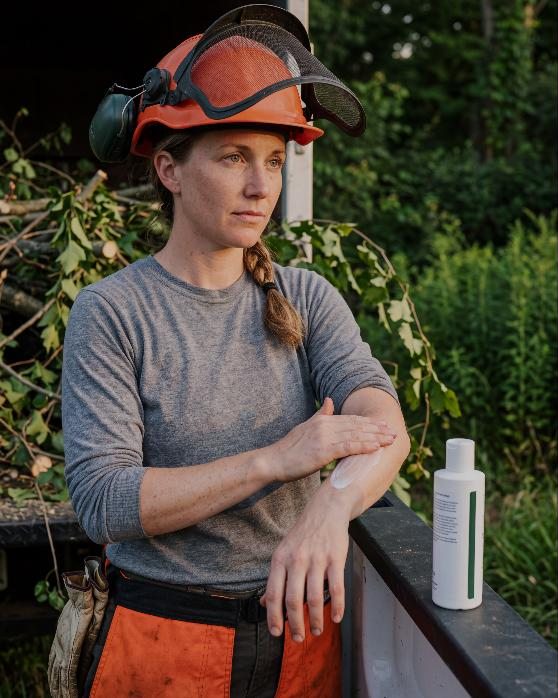
Skin cancers most commonly form in areas that get frequent sun exposure but are often forgotten when applying sunscreen:
Ears
Nose
Neck and back of the neck
Scalp and hairline
Back of hands and forearms
Lips
Face (especially cheeks and temples)
These areas are rarely protected by clothing, and because they are often missed during sunscreen application, they become prime sites for UV damage.
According to the Skin Cancer Foundation, regular daily use of an SPF 15 or higher sunscreen reduces the risk of developing SCC by about 40% and melanoma by 50%. But not all sunscreens are created equal.
For full protection, look for:
Broad-spectrum SPF (protects against UVA + UVB)
Water/sweat resistance (especially for workers in heat or outdoor environments)
Non-greasy, stay-put formulas (so it doesn’t run into eyes or wear off quickly)
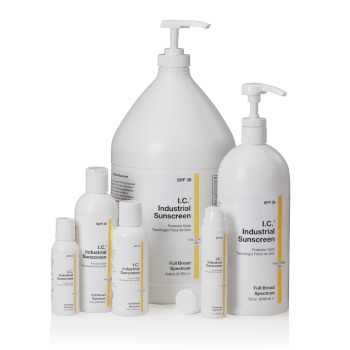
Unlike typical consumer sunscreens, I.C. Industrial Sunscreen is engineered for outdoor professionals. Its SPF 36, non-nano zinc oxide formula offers full broad-spectrum protection in a non-greasy, odorless, and sweat-resistant base that rubs in clear—so workers are more likely to use it daily without discomfort.
Skin cancer is largely preventable. May is a good reminder to re-evaluate your sun safety habits—not just on weekends, but every day. Applying sunscreen in the morning should be as routine as brushing your teeth, especially if you’re in the sun for work.
Start with the often-forgotten zones—ears, nose, neck, scalp, hands—and choose a formula you’ll actually use. Your skin, and your long-term health, will thank you.
Keep reading
Arc UV burns the skin your hood and leathers miss. Where it reaches, why it adds up over a career, and how to cover…
Read article →A Zinc Oxide Sunscreen for Welders That offers Protection against Heat Stress and ARC UV Radiation Using Crush Rock Protection “Zinc Oxide” against Skin…
Read article →Why R&R Lotion Chose Zinc Oxide: A Smarter Sunscreen for Heat Stress and UV Protection By: R. Fletcher Rich Rethinking Sunscreen Protection and Heat…
Read article →
Skin care that cares about the worker and about the work
Free samples for crews, safety managers and buyers. Buy direct, through your distributor or on GSA.