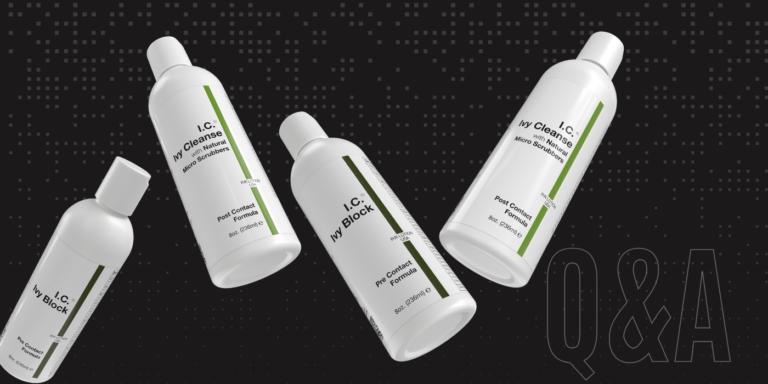




Poison Ivy, Oak & Sumac
Is Ivy Block Discontinued? What Happened, and What Works Now
The original IvyBlock lotion is gone. Here is why, and how I.C. Ivy Block from R&R Lotion protects crews before contact with poison ivy,…
Read article → Shop the full professional line →
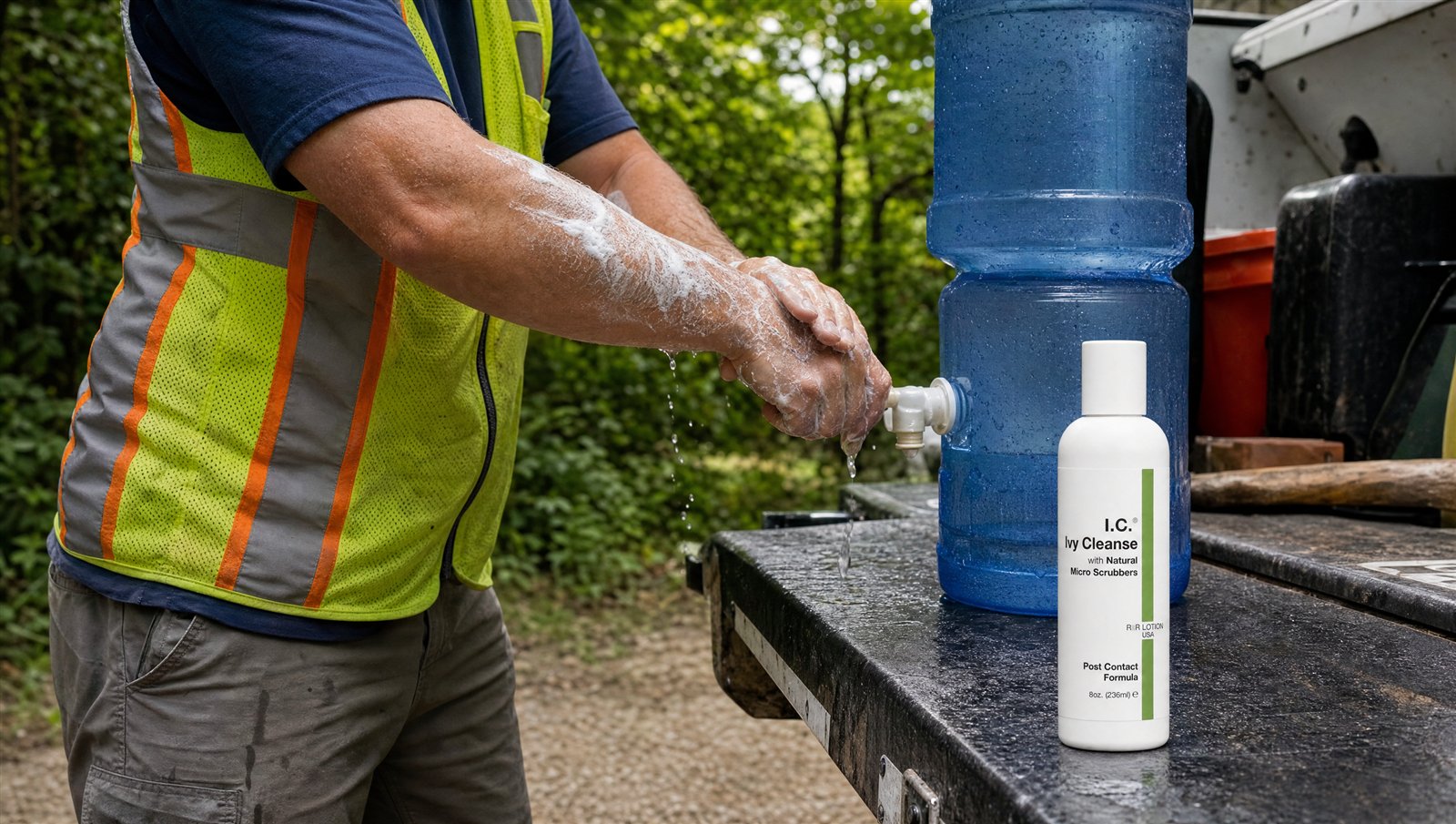
Short answer: Don’t use hot water on poison ivy. To get the oil off, wash right away with soap and lukewarm water, or with a cleanser made for urushiol. On an itchy rash, hot water can feel great for a minute, but the itch comes back and very hot water can irritate the skin. Dermatologists recommend cool compresses instead.
Poison ivy, oak and sumac all contain urushiol, an oily sap. In people who are sensitive to it, urushiol on the skin causes an allergic rash, usually 12 to 72 hours later. The rash itself isn’t the problem you can spread. The oil is.
The sooner you wash, the more oil you remove. The American Academy of Dermatology says to wash right away with warm, soapy water, rubbing alcohol or dish soap. NIOSH tells outdoor workers to rinse with rubbing alcohol, a poison-plant wash or degreasing soap and plenty of water, and to keep rinsing so the wash doesn’t dry on the skin.
Hot water doesn’t spread the rash. Oil that’s still on your skin, clothes or gear can spread, so if you shower before the oil is washed off, it can run onto other skin. Wash the exposed areas first, then shower normally.
Many people notice that very hot water briefly stops the itch, and it can feel better than scratching. The relief doesn’t last, and hot water can leave inflamed skin redder and more irritated. It’s also easy to scald skin that’s already damaged. Dermatologists recommend cool compresses and cool or lukewarm baths instead.
I.C. Ivy Relief temporarily relieves the pain and itch of poison ivy, oak and sumac rashes and helps dry oozing and weeping. Don’t use it with any other product containing diphenhydramine, including pills, and don’t use it on large areas of the body.
See a doctor if the rash is on your face, eyes or genitals, covers a large area, comes with fever or swelling, or isn’t improving after a week.
NIOSH notes that urushiol on tools, gloves, boots and clothing can stay active for up to 5 years. Wash work clothes separately in hot water with detergent; hot water is right for laundry, just not for your skin. Wipe tool handles with rubbing alcohol or soap and water, wearing disposable gloves.
Sources: American Academy of Dermatology, How to treat the rash and How can I prevent a rash?; NIOSH, Poisonous Plants and Work.
Keep reading
The original IvyBlock lotion is gone. Here is why, and how I.C. Ivy Block from R&R Lotion protects crews before contact with poison ivy,…
Read article →How to Use I.C. Ivy Block and I.C. Ivy Cleanse: A Comprehensive Q&A Guide By: Richard Rich Q1: What is I.C. Ivy Block and…
Read article →Is Cold or Hot Water More Effective for Washing Off Poison Ivy? Somebody on your crew brushes a vine, gets home, and runs the…
Read article →
Skin care that cares about the worker and about the work
Free samples for crews, safety managers and buyers. Buy direct, through your distributor or on GSA.
Each tier you reach gives you more. Open one to see what it unlocks.
See what it takes to reach each tier.
Highest tier
Each tier you reach gives you more. Open one to see what it unlocks.
See what it takes to reach each tier.
Highest tier

Welcome to the crew
Join our email list for your code, plus safety guides, new products and seasonal reminders. A few emails a month.
First order of $40 or more, one per customer. A few small sizes are excluded. Can't be combined with other codes. By signing up you agree to get marketing emails from R&R Lotion. Unsubscribe any time. Privacy Policy
You're on the list
Use it at checkout on your first order of $40 or more. We also sent a confirmation link to your inbox. Click it and we'll email the code so you have it for later.
Start shopping