




Hand Hygiene & Sanitizers
Sewage on Your Hands: CDC Hand Hygiene Steps for Wastewater Operators
The CDC's hand hygiene steps for workers who handle sewage, and how to follow them at the plant and out at lift stations with…
Read article → Shop the full professional line →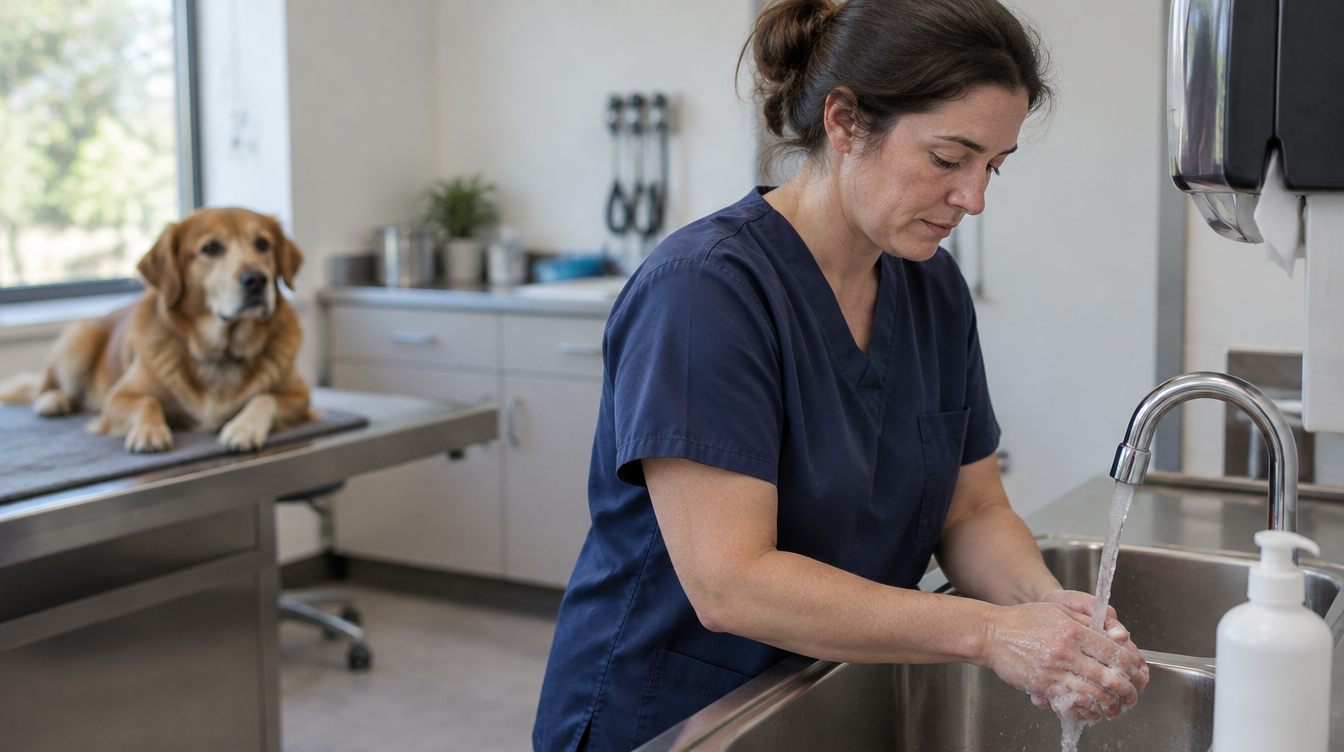
In a vet clinic, your hands touch everything. The dog with diarrhea in Exam 2. The cat’s ears. The fecal sample. The keyboard. The client’s pen. Then the next patient. Some of what animals carry can make people sick too. Those are zoonotic diseases, and most of them reach people the plain way: on hands.
This post walks through a hand hygiene routine for vets, techs and kennel staff. It is built on the Compendium of Veterinary Standard Precautions from the National Association of State Public Health Veterinarians (NASPHV), the go-to infection control guide for vet practices.
The Compendium is blunt about it. It calls consistent, thorough hand hygiene the single most important thing veterinary staff can do to cut the risk of zoonotic disease. It says most common pathogens spread by hand-to-mouth contact, either straight from animals or from the clinic environment.
That means the exam table, the kennel latch and the faucet handle all count. So does your phone.
The Compendium says to perform hand hygiene:
Its model infection control plan adds a few everyday ones: before eating, after using the restroom, after cleaning cages and after handling lab samples.
Gloves are part of the routine. The Compendium says to wear them when contact with feces, body fluids, vomit, wound drainage or broken skin is likely, for dental and obstetric work, and when cleaning cages and litter boxes. Change them between animals and whenever they tear. Never wash and reuse them.
But the Compendium also says wearing gloves does not remove the need for hand hygiene. Gloves can have tiny holes you cannot see, and hands get dirty taking them off. Clean your hands right after the gloves come off.
Here is what the Compendium says, straight:
So the sink is your first stop whenever hands are visibly dirty. The Compendium’s handwashing steps: wet hands, apply soap, lather, scrub for 20 seconds, rinse, dry with a disposable towel, and turn the faucet off with the towel.
For the sink, our I.C. Antibacterial Hand Cleaner is a gentle antibacterial hand cleaner made with benzalkonium chloride, without harsh solvents or drying alcohol. It is fragrance free and NSF registered (E2).
Some clinics add an alcohol-free sanitizer for the moments between sinks: the exam room, the treatment floor, the outdoor run. Common reasons are skin comfort through a long day, and not wanting a flammable product next to oxygen lines or hot equipment.
If you go that way, know what you are choosing. The CDC’s recommendation for health care is an alcohol-based rub. An alcohol-free product is a choice your clinic makes for its own reasons, and it never replaces washing visibly dirty hands.
I.C. Hand Sanitizing Cream is alcohol-free and uses benzalkonium chloride. It kills 99.99% of germs while it moisturizes, and it is NSF registered (E3). It is dermatologist tested: in a 50-subject patch test, there were zero reactions.
All that washing is hard on hands. The Compendium says dry, cracked skin is painful, shows the skin’s barrier is damaged, and is more likely to carry staph and other bacteria. It says moisturizing soaps and lotions help keep skin intact and help staff stick with hand hygiene.
It also gives a practical tip: when staff use lotion, personal containers are better than shared dispensers, which can get contaminated. A personal bottle at your station beats a communal pump by the sink.
For gloved work, I.C. Lotion Fragrance Free is a pre-gloving lotion with no silicones, lanolin, glycerin or mineral oils. It is NSF registered (E4) and leaves no oily residue.
For the full clinic kit, see our hand care page for veterinarians and vet techs.
The Compendium says to perform hand hygiene between exams of individual animals or groups. That can be a wash or, if your hands are not visibly dirty, a hand rub. It also says gloves are not needed for most exams of healthy animals, as long as good hand hygiene is practiced.
For routine handwashing, the Compendium says either plain or antimicrobial soap is appropriate. Technique matters more: 20 seconds of scrubbing, a good rinse and a clean disposable towel.
No. Keep washing when the routine calls for it, and take care of the skin. Moisturize after your last wash, use lotion from a personal container, and if cracks bleed or will not heal, see a clinician.
Keep reading
The CDC's hand hygiene steps for workers who handle sewage, and how to follow them at the plant and out at lift stations with…
Read article →Soap and water come first for most of the school day. When kids should wash, when sanitizer is fine, and how to make both…
Read article →Sap, pitch and bar oil don't rinse off, and gas or sanitizer make it worse. A simple no-water hand cleanup routine for tree crews.
Read article →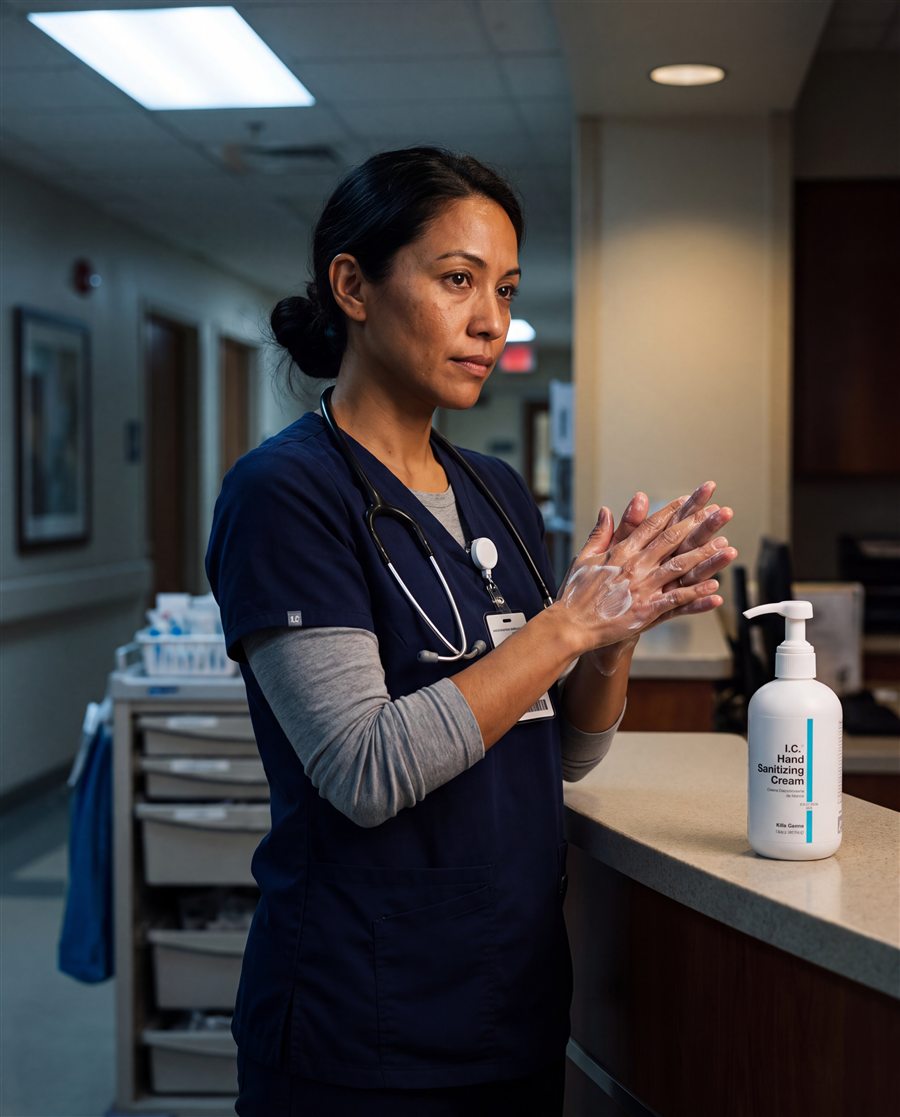
Skin care that cares about the worker and about the work
Free samples for crews, safety managers and buyers. Buy direct, through your distributor or on GSA.