

Hand Hygiene & Sanitizers
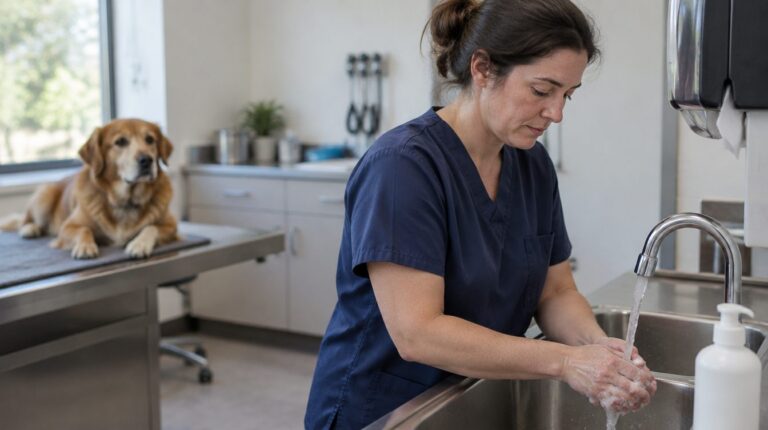
Hand Hygiene Against Zoonotic Disease: A Routine for Vet Clinics
A hand hygiene routine for vets, techs and kennel staff built on the NASPHV Compendium: when to wash, gloves, rubs and keeping skin intact.
Read article → Shop the full professional line →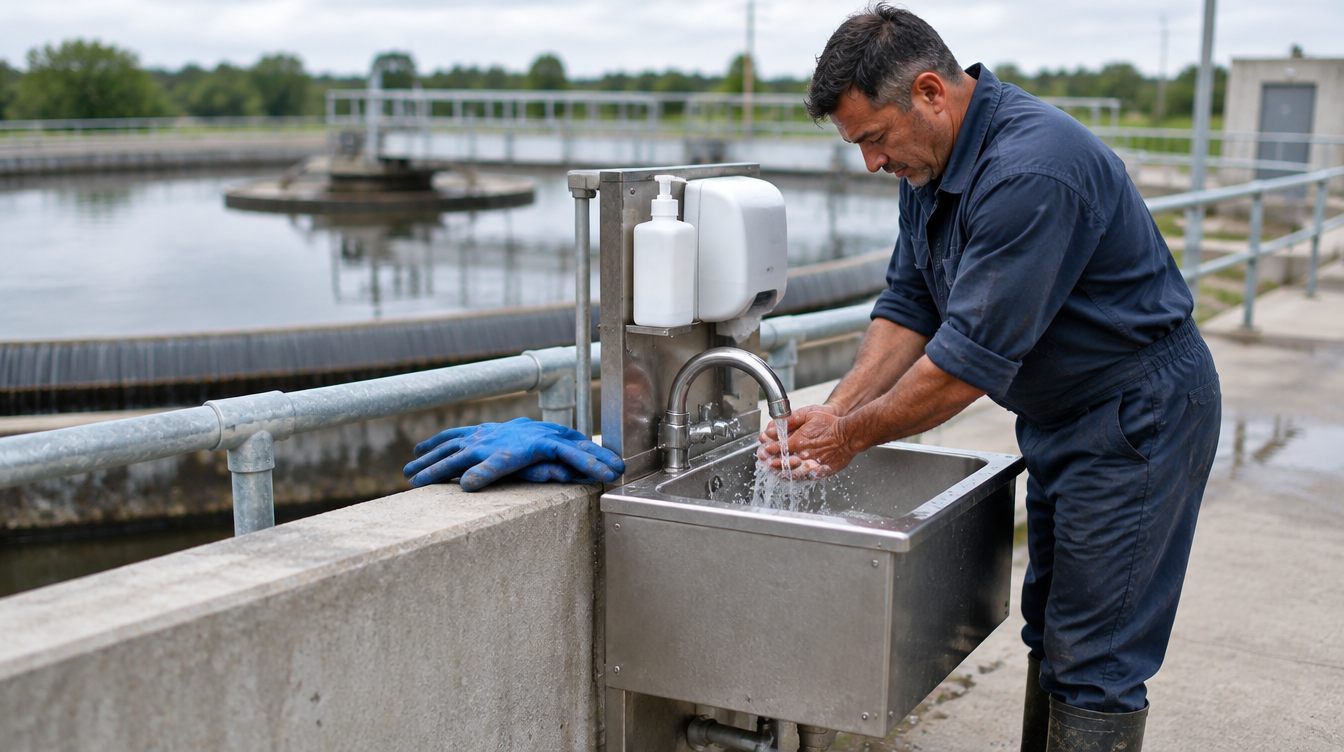
Pulling a pump, clearing a bar screen, cleaning a lift station, taking a grab sample at the headworks. In wastewater, raw sewage ends up on gloves, sleeves and tools every day. Most of the time the gloves do their job. The risk comes in the gaps: a glove that tears, a splash above the cuff, a hand that wipes sweat off your face, a sandwich eaten before you washed.
This post lays out the CDC’s hand hygiene steps for workers who handle sewage, and how to follow them at the plant and out in the collection system.
The CDC says workers who handle human waste or sewage may be at higher risk of getting sick from waterborne diseases. Those germs mostly reach people one way: from hands to the mouth, eyes or nose, or through breaks in the skin.
That is why most of the CDC’s advice for sewage workers is about hands and skin, not about any special product.
The CDC also says workers should be trained on their PPE and should have access to handwashing facilities. Goggles, a face mask or splash-proof face shield, liquid-repellent coveralls, waterproof gloves and rubber boots are all on its PPE list.
Notice what every step says: soap and water. That is the rule to build your routine around.
The CDC’s general hand sanitizer guidance backs it up. It says sanitizer may not work as well when hands are visibly dirty or greasy, and that soap and water work better against some germs. After sewage contact, hands are usually not “just a little germy.” Get to a sink.
At the plant, put the sink where the work is, not only in the locker room. A wash station near the headworks or the solids building gets used. One at the far end of the admin building does not.
For the plant sink, I.C. Heavy Duty Hand Cleaner handles the grease and grime that come with pump and screen work. Pumice scrubbers and cleansers strip oil and grease, it is solvent-free, and benzalkonium chloride kills 99.99% of germs. Scrub for at least 20 seconds, rinse well and dry with a disposable towel.
Collection crews and lift-station techs often work far from running water. Bring water with you if you can. A truck-mounted water tank or a jug with a spigot, soap and paper towels is a real wash station.
When that is not possible, here is a backup routine until you reach a sink:
This is a backup, not a replacement. The CDC’s steps say soap and water, and that stays the standard.
Washing this often is hard on skin. Cracked skin is a problem in this job, because the CDC’s advice is to keep sewage away from cuts and sores, and a crack is an opening.
I.C. Advanced Repair Hand Cream is a dimethicone skin protectant that helps prevent and temporarily protects chafed, chapped or cracked skin. It is fragrance-free.
For the rest of the plant kit, from mosquitoes at the basins to sun on the rounds, see our hand care page for water treatment workers.
No. The CDC says to wash with soap and water right after handling sewage and after taking off PPE. Use a waterless cleaner or sanitizer only as a backup when you cannot reach a sink, and wash as soon as you can.
Yes. The CDC says to wash with soap and water right after you remove your PPE. Gloves tear, and hands pick things up as gloves come off.
The CDC says to eat only in areas away from sewage work, after you change out of soiled clothes and wash your hands. If the truck is your break room, keep work gear out of the cab and wash before you eat.
Keep reading
A hand hygiene routine for vets, techs and kennel staff built on the NASPHV Compendium: when to wash, gloves, rubs and keeping skin intact.
Read article →Soap and water come first for most of the school day. When kids should wash, when sanitizer is fine, and how to make both…
Read article →Sap, pitch and bar oil don't rinse off, and gas or sanitizer make it worse. A simple no-water hand cleanup routine for tree crews.
Read article →
Skin care that cares about the worker and about the work
Free samples for crews, safety managers and buyers. Buy direct, through your distributor or on GSA.