


Hand Hygiene & Sanitizers
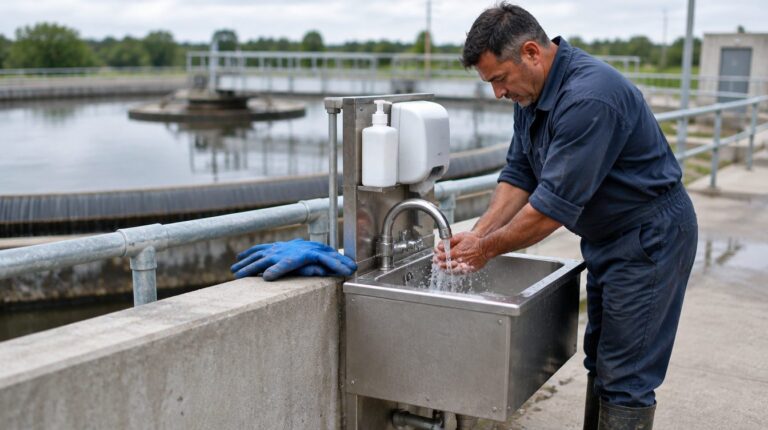
Sewage on Your Hands: CDC Hand Hygiene Steps for Wastewater Operators
The CDC's hand hygiene steps for workers who handle sewage, and how to follow them at the plant and out at lift stations with…
Read article → Shop the full professional line →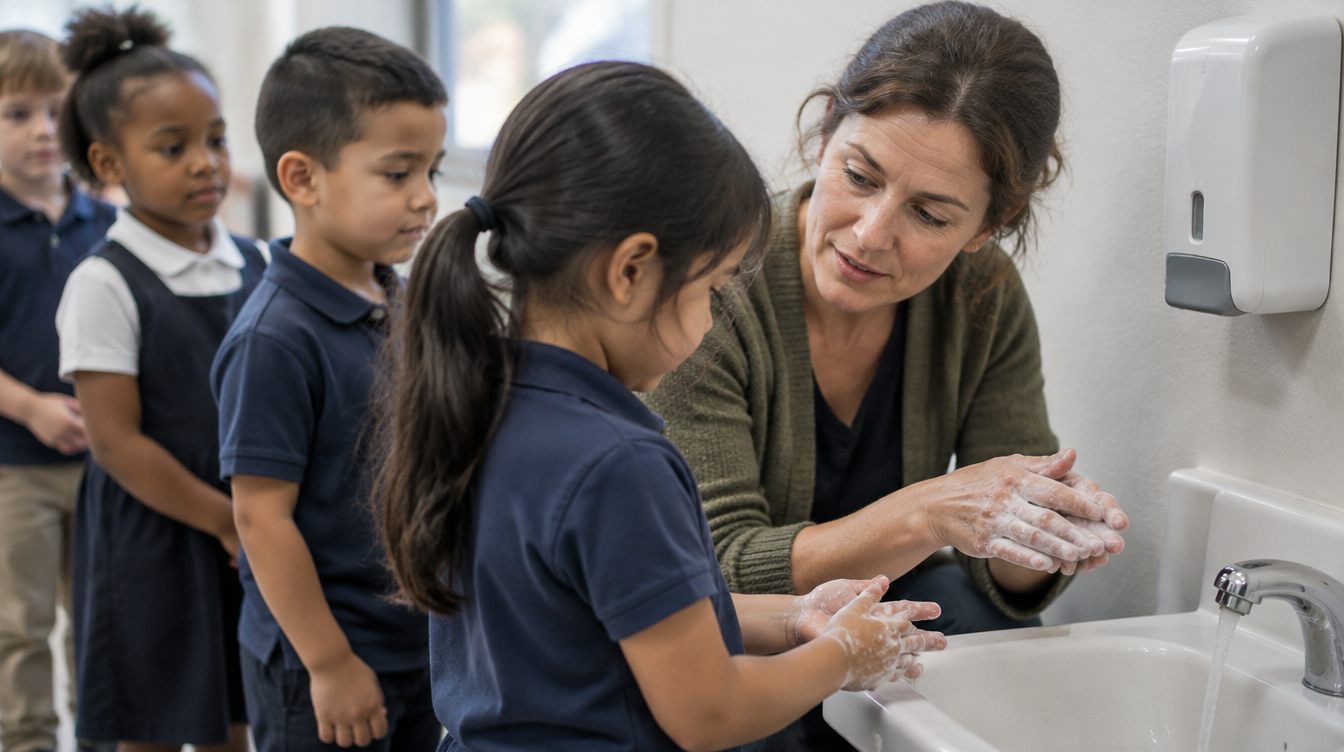
Kids will happily pump hand sanitizer all day. Getting them to stand at a sink for 20 seconds with soap is a different story. But for most of the moments that matter in a school day, the sink is the better choice.
This post is for teachers, aides and school nurses. It covers handwashing for kids: when they should wash, when sanitizer is fine, and how to make both habits stick.
CDC says washing hands with soap and water is the best way to get rid of germs in most situations. Soap and scrubbing lift dirt, grease and germs off the skin, and the rinse carries them down the drain.
Sanitizer is the backup. CDC says that if soap and water aren’t readily available, use a hand sanitizer with at least 60% alcohol. CDC also says sanitizer may not work as well when hands are visibly dirty or greasy. Kids coming in from recess with muddy hands need the sink, not a pump.
CDC’s key times to wash hands translate easily to a school day:
Sanitizer fills the gaps when a sink isn’t close: at the classroom door, after sharing a tablet, before a test, on a field trip, at the bus line. Hands should look clean when you use it.
CDC’s backup advice names an alcohol sanitizer with at least 60% alcohol. That’s what CDC recommends, and we want to say so plainly. Many schools still choose an alcohol-free option for the classroom shelf. A 61% alcohol gel is 122 proof and flammable, and swallowing even a small amount of alcohol sanitizer can poison a child, according to FDA.
If your school goes alcohol-free, I.C. Alcohol-Free Foaming Hand Sanitizer uses benzalkonium chloride 0.10% instead of alcohol. It kills 99.99% of germs in as little as 15 seconds. It’s non-flammable, fragrance free and dries with no sticky residue. It’s NSF registered (E3).
Alcohol-free does not mean safe to swallow. Keep every sanitizer, with or without alcohol, out of reach of young children, and have an adult hand out the pumps. FDA and CDC both say to supervise young children using hand sanitizer.
CDC’s five steps are easy to teach and easy to put on a poster by the sink:
For the classroom sink or the staff restroom, I.C. Antibacterial Hand Cleaner is a gentle, fragrance-free hand cleaner. Benzalkonium chloride kills 99.99% of germs. It has no harsh solvents and no drying alcohol. It’s NSF registered (E2).
For more on hand hygiene in schools, see our education page and the five-chapter education Field Notes.
Not for most situations. CDC says soap and water are best, and sanitizer is the backup when soap and water aren’t available. Sanitizer also doesn’t work as well on visibly dirty or greasy hands.
No. CDC’s backup advice is a sanitizer with at least 60% alcohol. Schools that choose alcohol-free often do it because alcohol sanitizer is flammable and can poison a child who swallows it. I.C. Alcohol-Free Foaming Hand Sanitizer kills 99.99% of germs with benzalkonium chloride instead.
No sanitizer is meant to be swallowed. Keep all sanitizers out of reach of young children and call Poison Control at 1-800-222-1222 if a child swallows any.
Keep reading
The CDC's hand hygiene steps for workers who handle sewage, and how to follow them at the plant and out at lift stations with…
Read article →A hand hygiene routine for vets, techs and kennel staff built on the NASPHV Compendium: when to wash, gloves, rubs and keeping skin intact.
Read article →Sap, pitch and bar oil don't rinse off, and gas or sanitizer make it worse. A simple no-water hand cleanup routine for tree crews.
Read article →
Skin care that cares about the worker and about the work
Free samples for crews, safety managers and buyers. Buy direct, through your distributor or on GSA.