




Hand Hygiene & Sanitizers
Sewage on Your Hands: CDC Hand Hygiene Steps for Wastewater Operators
The CDC's hand hygiene steps for workers who handle sewage, and how to follow them at the plant and out at lift stations with…
Read article → Shop the full professional line →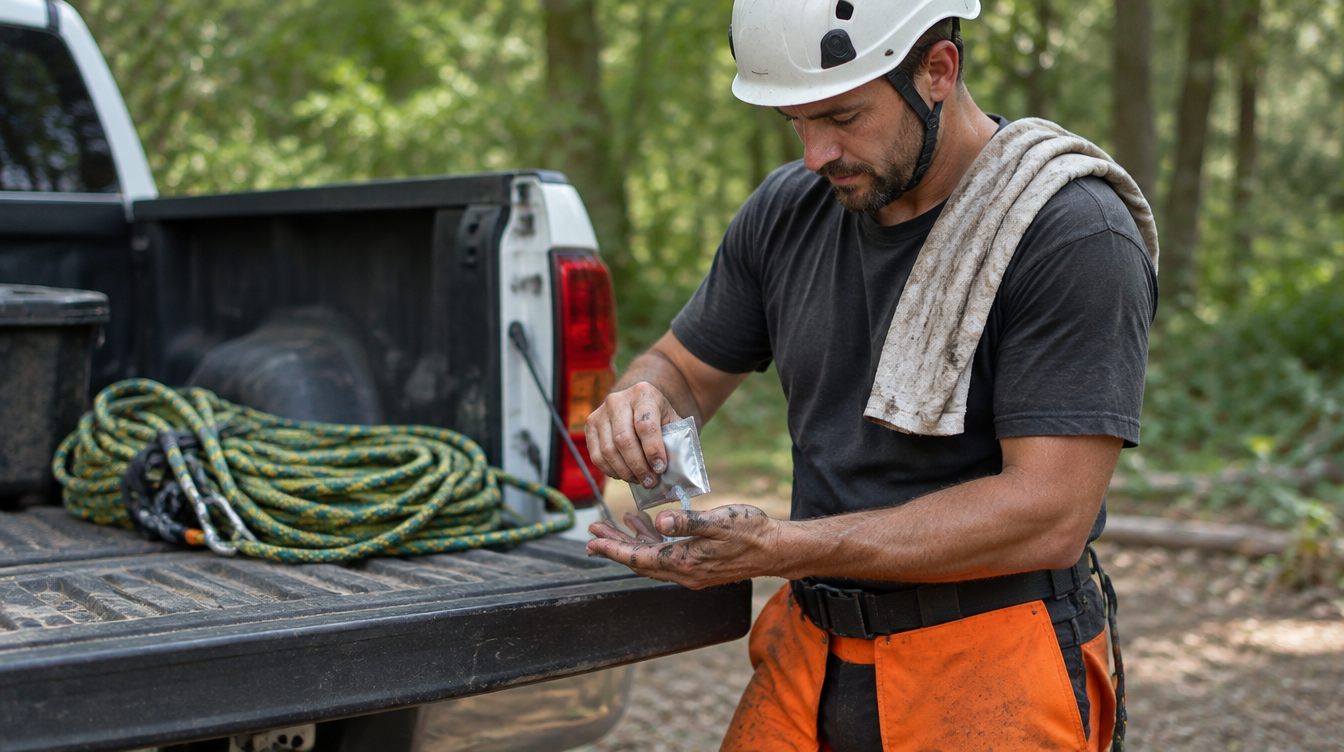
Ask any climber what’s on their hands at lunch and the answer is the same: sap, pitch, bar oil, two-stroke mix and dirt. Then add whatever was growing on the trunk. The nearest sink is back at the shop. So most crews wipe their hands on their pants, eat, and go back up.
This post covers what that grime does to your skin, why the usual fixes make it worse, and a simple routine for cleaning up in the truck when there’s no water, using a waterless hand cleaner tree crew members can keep within reach.
Tree work puts a lot of sticky stuff on bare skin. Pine and spruce pitch. Maple and walnut sap. Chainsaw bar oil that sprays off the chain and coats your gloves and wrists. Fuel from topping off the saw. Grease from the chipper and the bucket truck.
None of it comes off with a quick rinse from the water jug. Sap and pitch are resins. They’re made to stick. Oils hold dirt against the skin. By the end of the day your hands are dark, tacky and rough.
And it isn’t just dirt. NIOSH counts skin disease among the most common work-related illnesses, and contact dermatitis, a red, itchy, cracked rash from what touches your skin, is the most common kind. Hands get it most because hands touch everything.
Tree crews also work where poison ivy grows. The oil from poison ivy, oak and sumac, called urushiol, sticks to ropes, saws and gloves the same way sap does. If your hands are coated in pitch and bar oil, it’s easy to miss that you also picked up urushiol off a vine on the trunk.
Gas or solvent. Some guys still reach for the fuel can or a rag soaked in thinner. It works on pitch because it dissolves oil. It also dissolves your skin’s own oils. Those oils are what hold moisture in and keep irritants out. Strip them every day and your hands crack, sting and stay sore. NIOSH advises workers not to clean their hands with solvents.
Hand sanitizer. A squirt of gel feels like you did something. But CDC says hand sanitizers may not work as well when hands are visibly dirty or greasy. Sanitizer kills germs. It doesn’t lift sap or oil. On sticky hands it mostly smears the grime around.
Just wiping it off. A shop rag moves the top layer. The rest stays in the creases and under your nails, and then it’s on your sandwich.
What you need is a cleaner that grabs sticky grime and wipes off with a towel, no rinse needed. That’s what I.C. Antibacterial Waterless Hand Cleaner with Micro Scrubbers is for. It’s made for jobsites without water: apply, scrub, towel off.
It isn’t a replacement for soap and water when you get back to a sink. It’s what gets you clean enough to eat lunch, drive the truck and not track pitch onto everything you touch.
1. Before you eat or drive. Gloves off. Wipe the worst of the sap and oil off with a dry rag first. Then work a foil pack or a pump of waterless cleaner over both hands, between the fingers and around the nails. Scrub for about 20 to 30 seconds and towel it off. Do a second round if your hands are really black.
2. After touching vines or brush. If you pulled ivy off a trunk or cleared a fence line, treat your hands as if they carry urushiol. Keep gloved hands off your face. Wash the exposed skin as soon as you can. AAD says washing within 10 to 20 minutes of contact can sometimes still prevent a rash.
3. Back at the shop. Wash with soap and running water. If you were in poison ivy, use I.C. Ivy Cleanse, a skin cleanser formulated to wash away urushiol, the oil from poison ivy, oak and sumac. Wash gently, don’t scrub hard, and rinse well with cool water. Clean under your nails, where the oil can get trapped.
4. Clean your gear. Urushiol and bar oil both ride on gloves, rope bags and saw handles. Wash gloves and work clothes separately. Wipe down saw handles and lanyards with gloves on.
5. Take care of your hands at night. Pat them dry and leave them slightly damp, then put on a fragrance-free hand cream. AAD notes that thick creams tend to be less irritating on dry, chapped skin.
Dry, rough hands after a long week are normal. These are not:
If your hands won’t settle down, get them looked at. Tell the clinician what you work with: sap, bar oil, fuel and poison ivy.
For more on what tree work does to skin, see our arborists and landscaping page and the five-chapter Field Notes for tree crews.
No. Sanitizer is made to kill germs, not lift sticky grime. CDC says sanitizers may not work as well when hands are visibly dirty or greasy. Get the sap off first with a waterless cleaner, then wash with soap and water when you can.
Yes. Solvents cut pitch by dissolving oil, including your skin’s own oils. Doing it every day dries and cracks the skin. NIOSH advises against cleaning skin with solvents.
Don’t count on it. Waterless cleaner is for sap, oil and grime. For urushiol, wash the skin as soon as you can with soap or a poison ivy wash like I.C. Ivy Cleanse and plenty of cool water, and wash your gloves and tools too.
Keep reading
The CDC's hand hygiene steps for workers who handle sewage, and how to follow them at the plant and out at lift stations with…
Read article →A hand hygiene routine for vets, techs and kennel staff built on the NASPHV Compendium: when to wash, gloves, rubs and keeping skin intact.
Read article →Soap and water come first for most of the school day. When kids should wash, when sanitizer is fine, and how to make both…
Read article →
Skin care that cares about the worker and about the work
Free samples for crews, safety managers and buyers. Buy direct, through your distributor or on GSA.