Short answer: Ticks wait in brush and tall grass and climb onto passing legs. For crews, the best protection is to stack the steps: an EPA-registered repellent on exposed skin, permethrin-treated work clothes, pants tucked into socks, and a full tick check at the end of every shift.
Where and when crews pick up ticks
Tick season peaks roughly April through September, but adult ticks are active on warm winter days too. Right-of-way clearing, wooded edges, fence lines and tall grass are where line crews, tree crews, surveyors and landscapers pick them up.
What a tick bite looks like
Most tick bites look like a small red bump. A rash that spreads over the next days, sometimes in a bull’s-eye pattern, can be a sign of Lyme disease. Fever, fatigue or aches in the weeks after a bite are a reason to see a doctor. Tell them about the bite.
How to remove a tick
- Grab the tick with fine-tipped tweezers as close to the skin as you can.
- Pull straight up with steady pressure.
- Clean the bite and your hands with soap and water or rubbing alcohol.
- Don’t use matches, petroleum jelly or nail polish.
On the crew: a simple routine
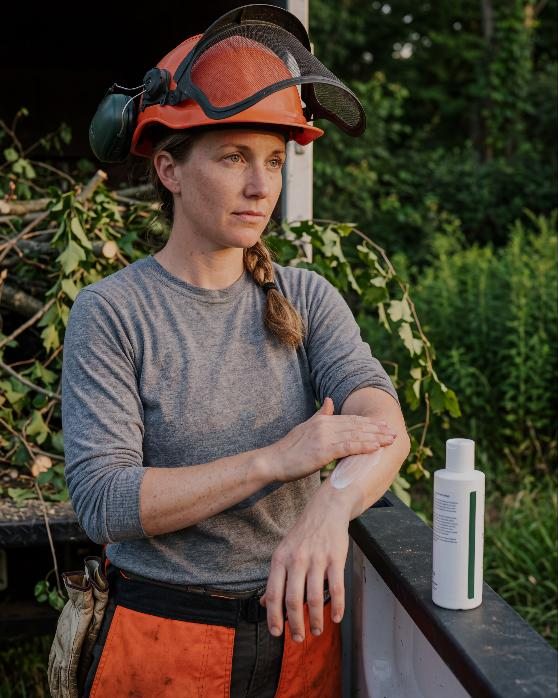
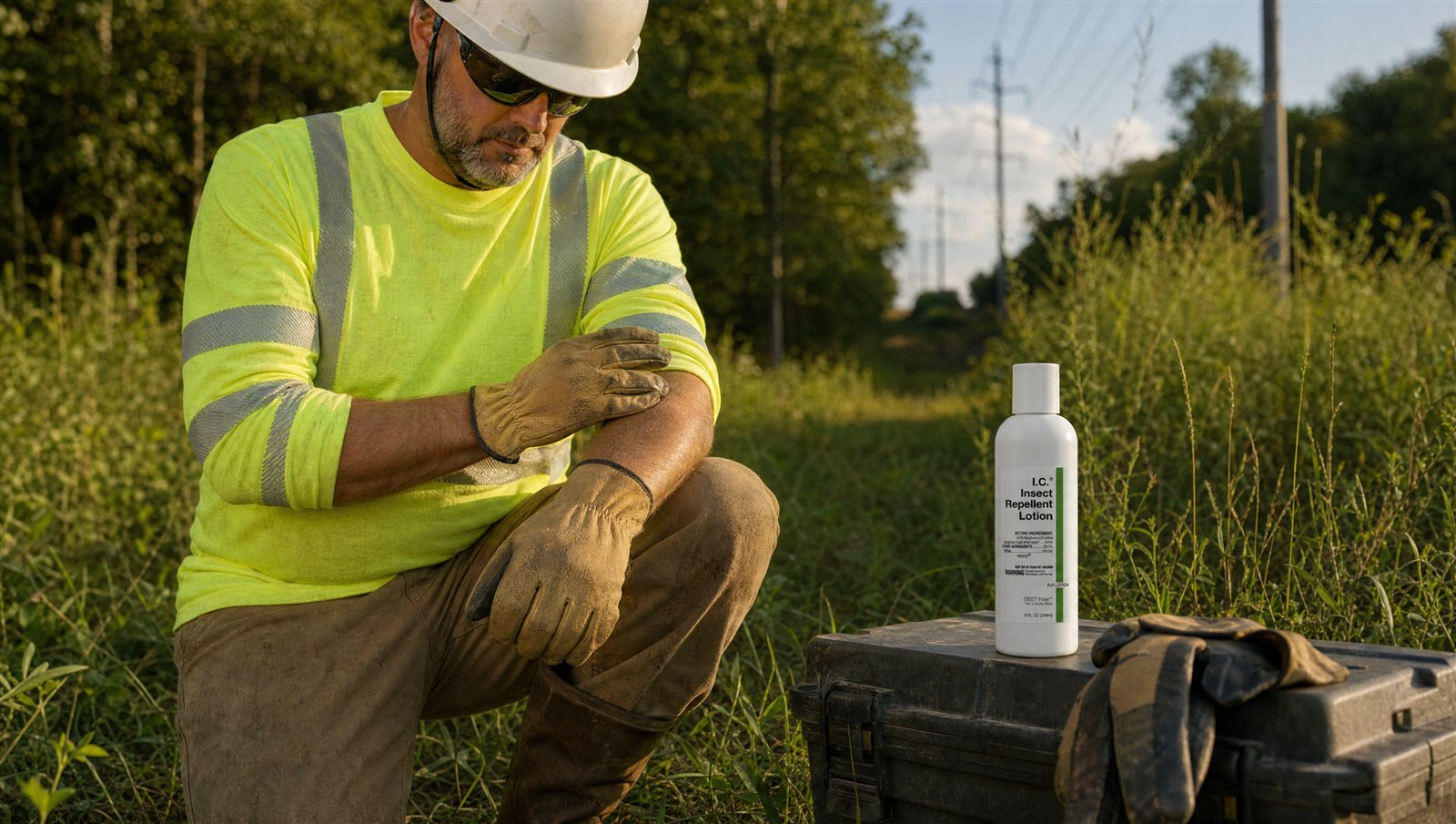
- Before the shift: repellent on exposed skin. Treat boots, pants and socks with permethrin, on clothing only and never on skin, or buy permethrin-treated workwear.
- During: pants tucked into socks, and stay out of the tall grass where you can.
- After: shower and do a full tick check within two hours: behind the knees, the waistband, armpits and hairline. Run work clothes in a hot dryer to kill ticks.
More than Lyme
Ticks also spread Rocky Mountain spotted fever, anaplasmosis, ehrlichiosis and babesiosis. The lone star tick is linked to alpha-gal syndrome, an allergy to red meat.
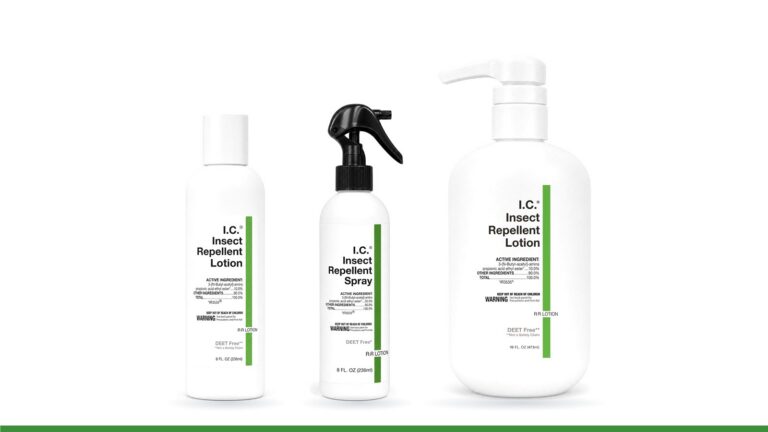
I.C. Insect Repellent
I.C. Insect Repellent uses IR3535 10%, an EPA-registered active, and repels mosquitoes and ticks for up to 8 hours. It’s DEET-free and odorless, and it’s glove-tested with Class 2 rubber lineman’s gloves (ASTM D120). It comes as a lotion or spray, from single-use foils to gallons.
Sources: CDC, Preventing Tick Bites; EPA, Find the Repellent That Is Right for You.