




Hand & Skin Care
Work-Safe Hand Cream: What to Use Under Nitrile Gloves
Why work hands crack, what to look for in a lotion you wear under gloves, and when to put it on.
Read article → Shop the full professional line →

By the last patient of the day, a lot of hygienists and assistants have hands that feel tight, rough and sore. The knuckles are red. The skin around the nails is splitting. Then you go home, do the dishes, and start again at 7 a.m.
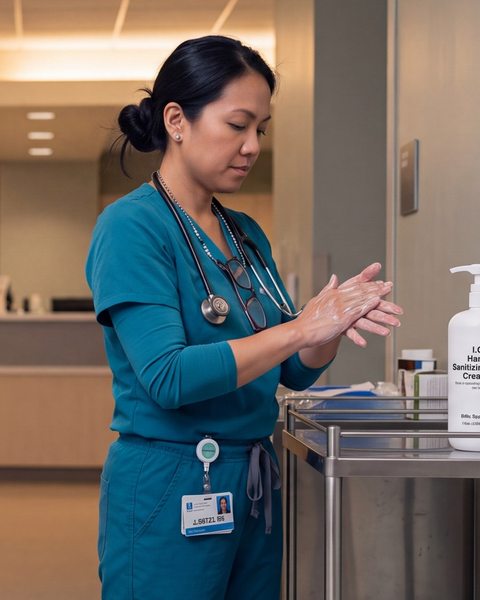
The routine that keeps patients safe is hard on your hands. You can’t skip it. But you can change what you do at the end of the shift so your hands come back in better shape the next morning. Here’s a routine for the chapped hands dental hygienists and assistants know too well.
Think of the outer layer of your skin like a brick wall. The skin cells are the bricks. Natural oils and lipids are the mortar that holds moisture in and keeps irritants out.
A dental shift wears down that mortar from three sides:
AAD notes that frequent handwashing can leave skin dry and chapped. NIOSH counts wet work, with hands wet or gloved for long stretches, as one of the main causes of work-related skin problems.
CDC recommends hand lotion to help prevent the dryness that comes with frequent hand hygiene. It also gives a timing rule. Petroleum-based lotions can weaken latex gloves and make them more permeable. So lotions with petroleum or other oil emollients should be used only at the end of the workday. During the day, CDC’s training says to use a water-based product and check with the maker about how it works with your gloves.
That gives you a two-part routine:
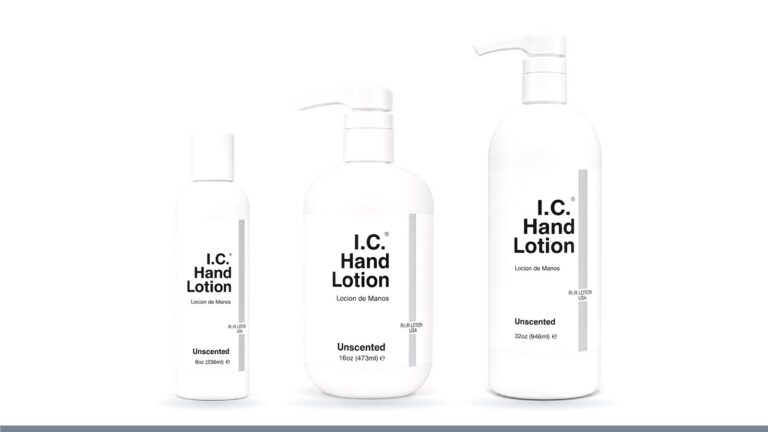
I.C. Lotion, Fragrance Free is built for this part. It has a purified DI water base and no silicones, lanolin, glycerin, mineral oils, fragrance or dye. It’s made for use before nitrile, latex or vinyl gloves and dries with no oily residue. It’s NSF registered (E4).
Use a small amount on clean, dry hands at the start of the day and at lunch. Let it dry completely before you glove. If your office provides a specific lotion, use that one. CDC advises using only lotions your facility approves.
Once your last glove is off and your last wash is done, this is when to put something heavier on.
I.C. Advanced Repair Hand Cream is a dimethicone skin protectant (dimethicone 4%) that helps prevent and temporarily protects chafed, chapped or cracked skin. It’s fragrance-free and dermatologist tested: a 50-subject patch test with zero reactions (ALS / BioScreen, Study 22-522A, 2022). Because it’s a richer cream with oils in the base, it’s for after the shift, not under your gloves.
Here’s the routine:
Hand cream helps with dry, chapped skin. It doesn’t treat a rash or an allergy. See a clinician if:
Some people react to glove materials or to ingredients in hand products. A clinician can help you figure out the cause. Tell your office manager too, so the practice can look at glove and product options.
For more on hand care in the practice, see our dentistry page.
Save the richer cream for the end of the day. CDC says lotions with petroleum or other oil emollients should be used only at the end of the workday. During the day, use a water-based lotion that’s made to go under gloves, such as I.C. Lotion, Fragrance Free.
Right after your last wash, while your hands are still a little damp, and again before bed.
I.C. Advanced Repair Hand Cream helps prevent and temporarily protects chafed, chapped or cracked skin. If your hands bleed, blister or don’t get better, see a clinician.
Keep reading
Why work hands crack, what to look for in a lotion you wear under gloves, and when to put it on.
Read article →Wet cement is strongly alkaline and can burn skin. How to keep it off, clean up concrete on hands without solvents, and care for…
Read article →What fume, soot and grinding dust leave on a welder's skin, what OSHA's chromium rule says about washing, and how to set up the…
Read article →
Skin care that cares about the worker and about the work
Free samples for crews, safety managers and buyers. Buy direct, through your distributor or on GSA.
Each tier you reach gives you more. Open one to see what it unlocks.
See what it takes to reach each tier.
Highest tier
Each tier you reach gives you more. Open one to see what it unlocks.
See what it takes to reach each tier.
Highest tier

Welcome to the crew
Join our email list for your code, plus safety guides, new products and seasonal reminders. A few emails a month.
First order of $40 or more, one per customer. A few small sizes are excluded. Can't be combined with other codes. By signing up you agree to get marketing emails from R&R Lotion. Unsubscribe any time. Privacy Policy
You're on the list
Use it at checkout on your first order of $40 or more. We also sent a confirmation link to your inbox. Click it and we'll email the code so you have it for later.
Start shopping