



Hand Hygiene & Sanitizers
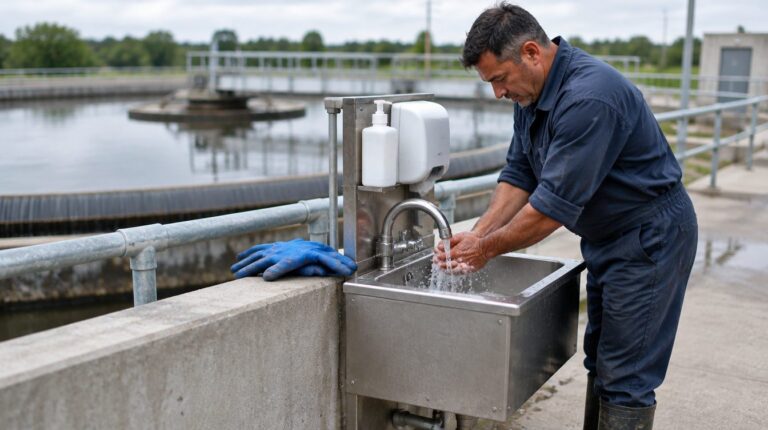
Sewage on Your Hands: CDC Hand Hygiene Steps for Wastewater Operators
The CDC's hand hygiene steps for workers who handle sewage, and how to follow them at the plant and out at lift stations with…
Read article → Shop the full professional line →
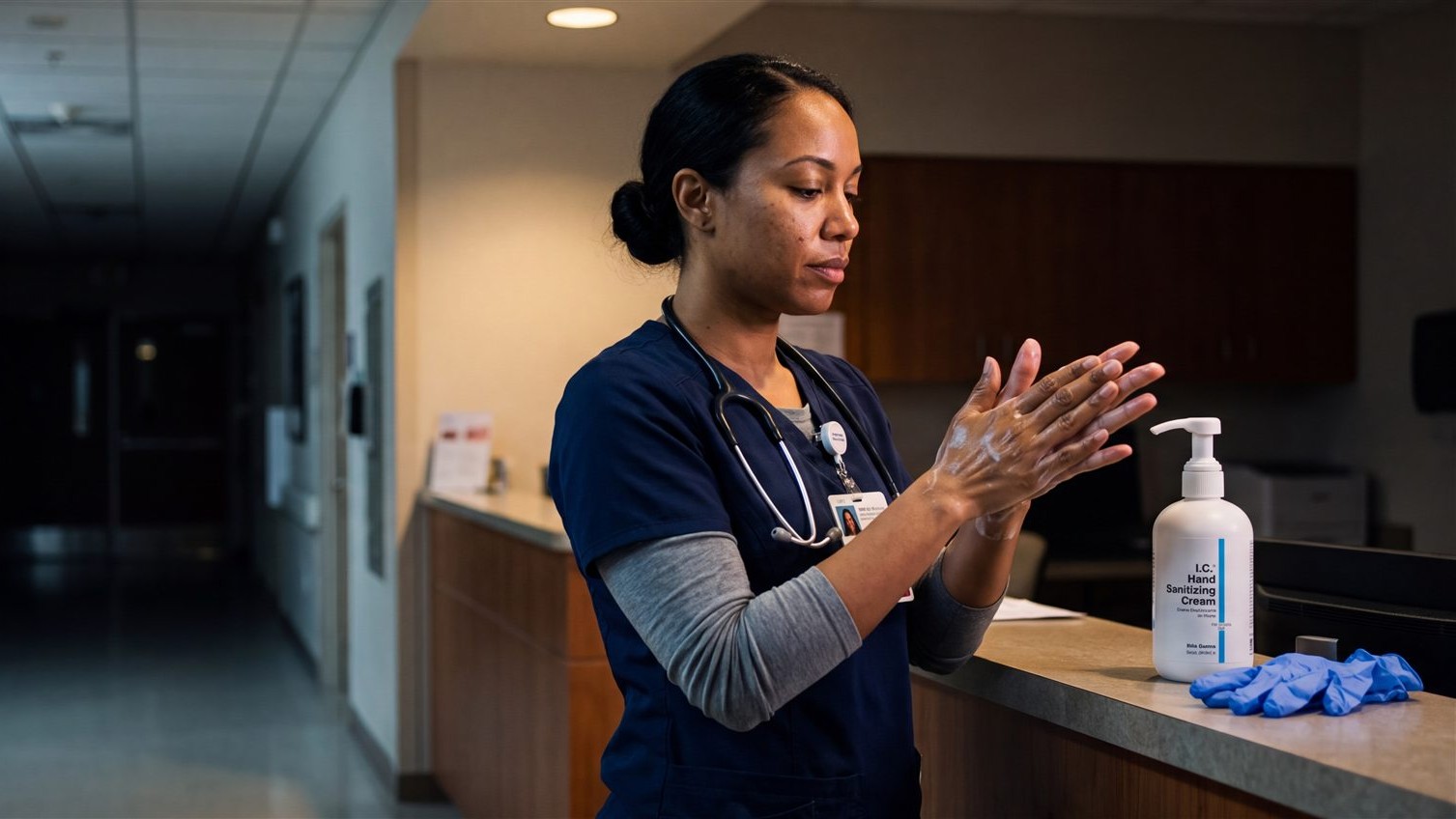
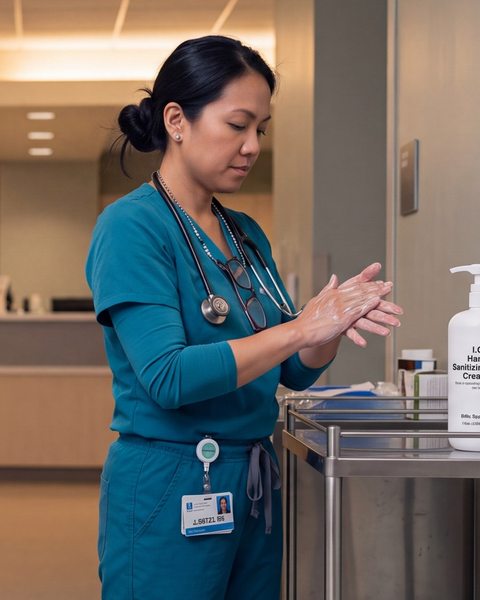
There’s a pump of alcohol rub outside every patient room on your unit. There’s probably also a tube of drugstore hand cream in somebody’s locker, bought in November and squeezed flat by January. Between those two objects is the reason nurses’ cracked hands come back every winter, and the reason most of us treat the problem the wrong way.
According to the CDC, a healthcare provider may need to clean their hands as many as 100 times in a 12-hour shift. Put that in time: at 20 seconds a cleaning, it’s more than half an hour a shift with hands wet with rub or soap. Then the hands go into gloves, come out damp and get cleaned again.
Alcohol does its job on germs. It also dissolves the oils that hold the outer layer of skin together. Do that 100 times, add a hot-water scrub at the sink, and the skin over the knuckles splits. That’s irritant hand dermatitis.
Cold outside air holds little moisture, and the heated air inside a hospital holds even less. Skin that’s already short on oil loses water faster, so the small cracks you had in October are open and bleeding by December.
How common is it? The honest answer is that nobody agrees on one number. Studies of nurses and hospital staff put hand dermatitis anywhere from about 1 in 5 to more than half, depending on the country, the unit and how the question was asked. The studies vary on the number. They don’t vary much on the cause: frequent hand hygiene, wet work and gloves.
Split skin is harder to get clean, and it hurts. And a nurse whose hands burn every time they hit the rub will use it less. The CDC’s own hand-hygiene guideline lists irritation and dryness among the reasons staff give for skipping it, and the CDC reports that some providers clean their hands less than half the times they should.
So the fix is not fewer hand cleanings. It’s putting back what each cleaning takes out.
We make I.C. Hand Sanitizing Cream for the part of this cycle that alcohol makes worse. Its active is benzalkonium chloride (BZK), an alcohol-free antiseptic that kills 99.99% of germs. Alcohol flashes off in seconds and takes your skin’s oils with it. There’s no alcohol in the cream, so it goes on with dimethicone, which helps hold moisture in, plus shea butter, sunflower butter and vitamins A, D and E, and every cleaning puts something back. It’s non-flammable and NSF E3 registered. And we’ve belonged to APIC, the association for infection-prevention professionals, for more than 20 years, so we build for the people who write your hand-hygiene policy.
For the moisturizer step, I.C. Lotion (fragrance-free) is compatible with CHG and safe to use before nitrile, latex or vinyl gloves.
Here’s the limit, and you should hear it from us. The CDC still prefers alcohol-based rub for most hand hygiene in patient care, and no sanitizer, ours included, replaces soap and water when hands are visibly dirty or when your policy calls for a wash, like a C. diff room. Your infection-control team decides where a BZK product belongs on your unit. Where it earns its place: staff whose hands are already cracked, units where alcohol can be swallowed or misused, like behavioral health and memory care, and anywhere flammable storage is a headache.
Want to try it on your unit? Request samples, or book a free 20-minute winter hand-care in-service for your nurse educators. Find a distributor or request samples.
Then go look in the lockers on your unit. Whatever’s in there tells you what your hand-care program is missing.
Related reading: Work-safe hand cream: what to use under nitrile gloves · Hand sanitizer and residents with dementia: why alcohol-free · Hand care for healthcare teams
Keep reading
The CDC's hand hygiene steps for workers who handle sewage, and how to follow them at the plant and out at lift stations with…
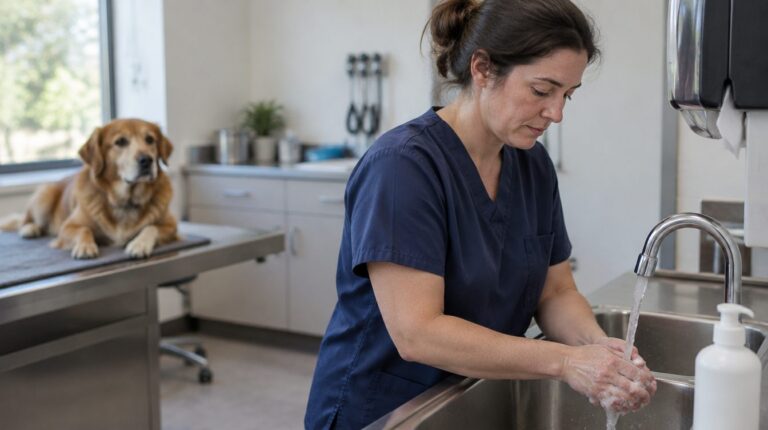
Read article →A hand hygiene routine for vets, techs and kennel staff built on the NASPHV Compendium: when to wash, gloves, rubs and keeping skin intact.
Read article →Soap and water come first for most of the school day. When kids should wash, when sanitizer is fine, and how to make both…
Read article →
Skin care that cares about the worker and about the work
Free samples for crews, safety managers and buyers. Buy direct, through your distributor or on GSA.
Each tier you reach gives you more. Open one to see what it unlocks.
See what it takes to reach each tier.
Highest tier
Each tier you reach gives you more. Open one to see what it unlocks.
See what it takes to reach each tier.
Highest tier

Welcome to the crew
Join our email list for your code, plus safety guides, new products and seasonal reminders. A few emails a month.
First order of $40 or more, one per customer. A few small sizes are excluded. Can't be combined with other codes. By signing up you agree to get marketing emails from R&R Lotion. Unsubscribe any time. Privacy Policy
You're on the list
Use it at checkout on your first order of $40 or more. We also sent a confirmation link to your inbox. Click it and we'll email the code so you have it for later.
Start shopping