


Hand Hygiene & Sanitizers
Sewage on Your Hands: CDC Hand Hygiene Steps for Wastewater Operators
The CDC's hand hygiene steps for workers who handle sewage, and how to follow them at the plant and out at lift stations with…
Read article → Shop the full professional line →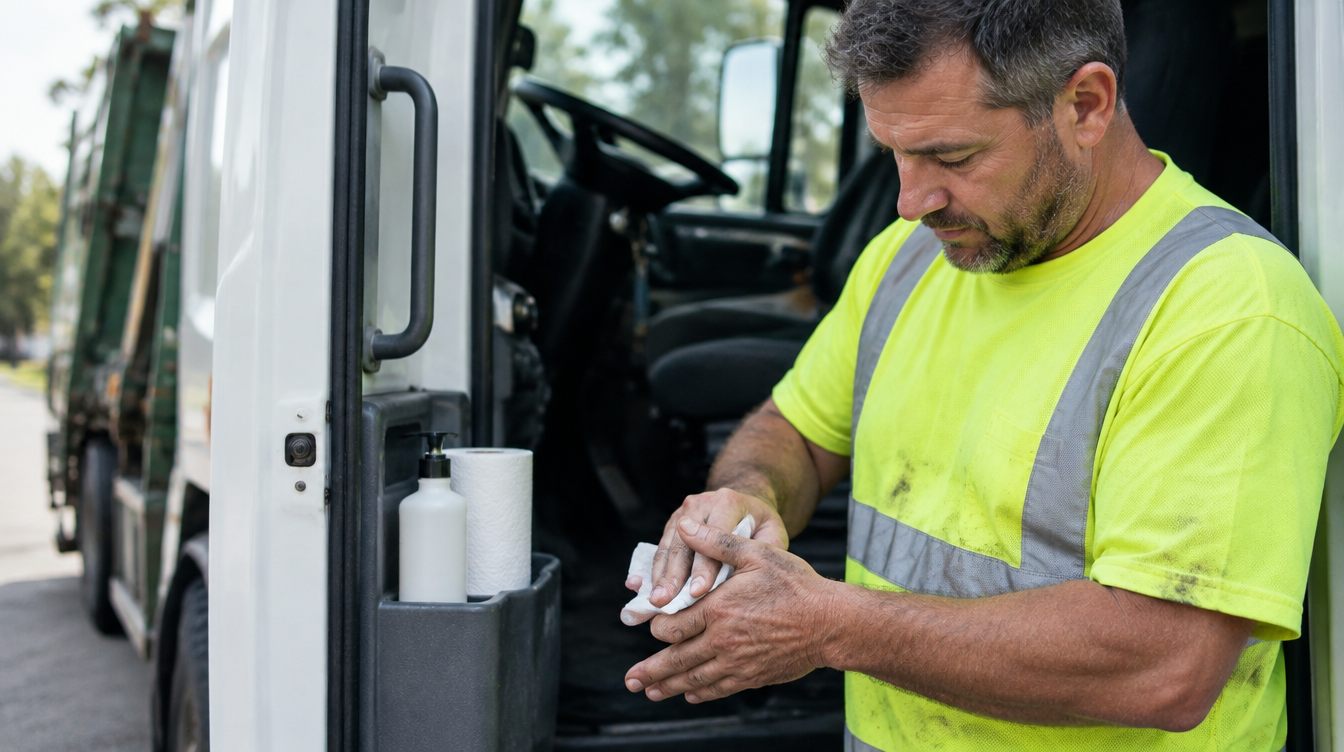
On a collection route you handle hundreds of cans and bags before lunch. Leaking bags. Sticky lids. Diapers, pet waste, spoiled food, motor oil someone poured in the recycling. Gloves catch most of it. Not all of it. And when it is time to eat, the nearest sink might be back at the yard, 40 miles away.
This post covers why hand hygiene matters so much on the route, what works when there is no water, and a simple routine you can run from the cab.
The CDC lists “after touching garbage” as one of the key times to wash your hands. For a sanitation crew, that is the whole shift.
Trash also carries human waste: diapers, pet waste and worse. The CDC’s advice for anyone handling human waste or sewage is clear. Wash with soap and water right after handling it, and before you eat or drink. Keep your hands away from your face, mouth, eyes and nose. Cover cuts and sores with clean, dry bandages. Wear waterproof gloves.
Then there is grease. Food waste, motor oil and hydraulic fluid from the packer all end up on your gloves and wrists. That matters for the next part.
The CDC says soap and water is the best option in most situations. It also says hand sanitizer may not work as well when hands are visibly dirty or greasy. Sanitizer can also miss chemicals, which soap and water handle better.
When soap and water are not available, the CDC’s backup is an alcohol-based sanitizer with at least 60 percent alcohol. But on a route, your hands are rarely just “a little germy.” They are dirty and often greasy. Sanitizer on top of grime is a weak step.
So the first job is getting the grime off. Then, if you want, you sanitize clean hands. Then you wash for real when you reach a sink.
Keep this kit behind the seat: a roll of shop towels, a waterless hand cleaner, a sanitizing cream and spare gloves.
For step two we make I.C. Antibacterial Waterless Hand Cleaner. It needs no rinse: apply, scrub and towel off. Micro scrubbers lift tar, oil, grease and carbon, and benzalkonium chloride kills 99.99% of germs. It is alcohol-free and fragrance free. It comes in pump bottles for the truck and single-use foil packets for a pocket.
For step three, I.C. Hand Sanitizing Cream is an alcohol-free sanitizer that uses benzalkonium chloride. It kills 99.99% of germs while it moisturizes. That helps on hands that already take a beating all day. It is not a substitute for washing, and it goes on clean hands, not greasy ones.
Supervisors, a few things make this routine stick:
For the full route kit, including sun, heat and bugs at the landfill, see our hand care page for waste management crews.
No. Soap and water at a sink is still the best option. A waterless cleaner is for when you cannot get to one. Use it to get the grime off on the route, and wash for real when you reach a sink.
It is not a good idea. The CDC says sanitizer may not work as well on visibly dirty or greasy hands. Clean the grime off first, then sanitize.
Stop, clean it as well as you can, and cover it with a clean, dry bandage before you go back to work. Swap in fresh gloves. If it is deep, was caused by a needle or other sharp waste, or gets red and swollen, report it and see a clinician.
Keep reading
The CDC's hand hygiene steps for workers who handle sewage, and how to follow them at the plant and out at lift stations with…
Read article →A hand hygiene routine for vets, techs and kennel staff built on the NASPHV Compendium: when to wash, gloves, rubs and keeping skin intact.
Read article →Soap and water come first for most of the school day. When kids should wash, when sanitizer is fine, and how to make both…
Read article →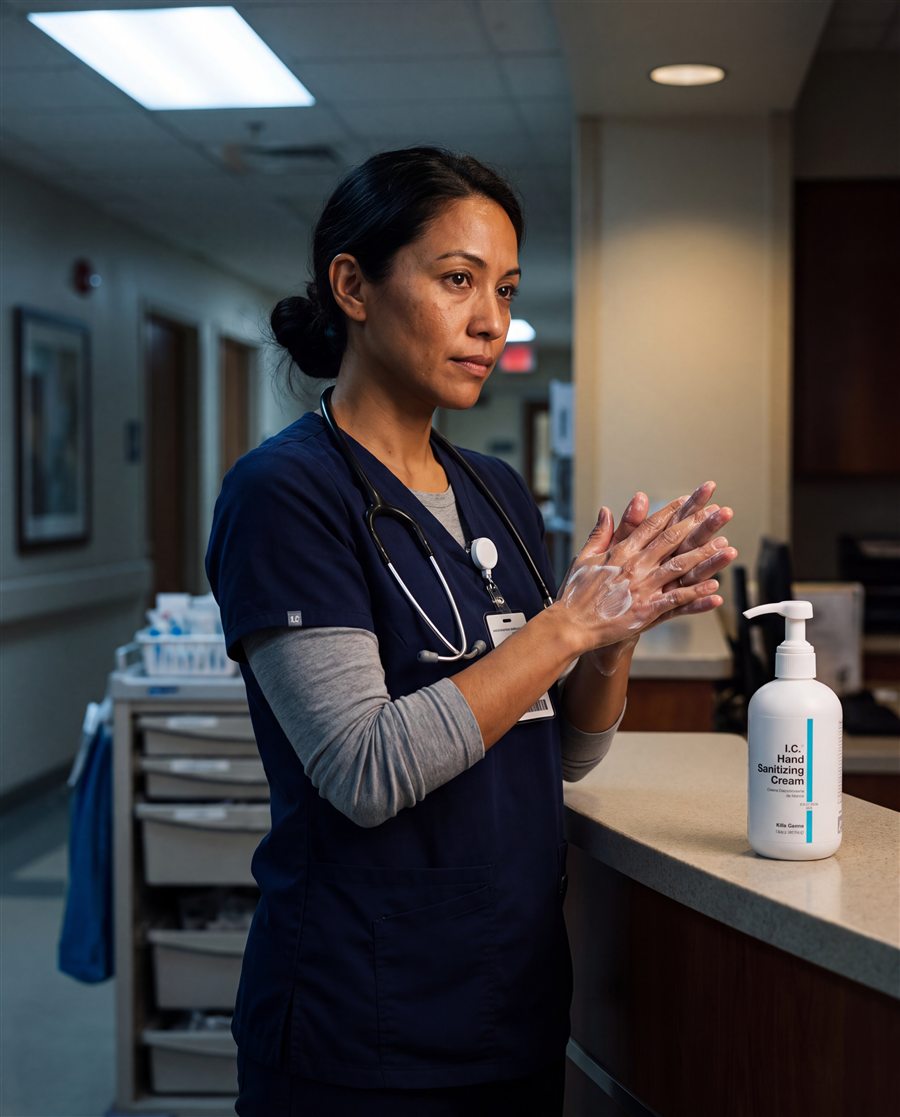
Skin care that cares about the worker and about the work
Free samples for crews, safety managers and buyers. Buy direct, through your distributor or on GSA.

Welcome to the crew
Join our email list for your code, plus safety guides, new products and seasonal reminders. A few emails a month.
First order of $40 or more, one per customer. A few small sizes are excluded. Can't be combined with other codes. By signing up you agree to get marketing emails from R&R Lotion. Unsubscribe any time. Privacy Policy
You're on the list
Use it at checkout on your first order of $40 or more. We also sent a confirmation link to your inbox. Click it and we'll email the code so you have it for later.
Start shopping