






Hand & Skin Care
Soot, Grease and Metal Dust: Cleaning Up After a Welding Shift
What fume, soot and grinding dust leave on a welder's skin, what OSHA's chromium rule says about washing, and how to set up the…
Read article → Shop the full professional line →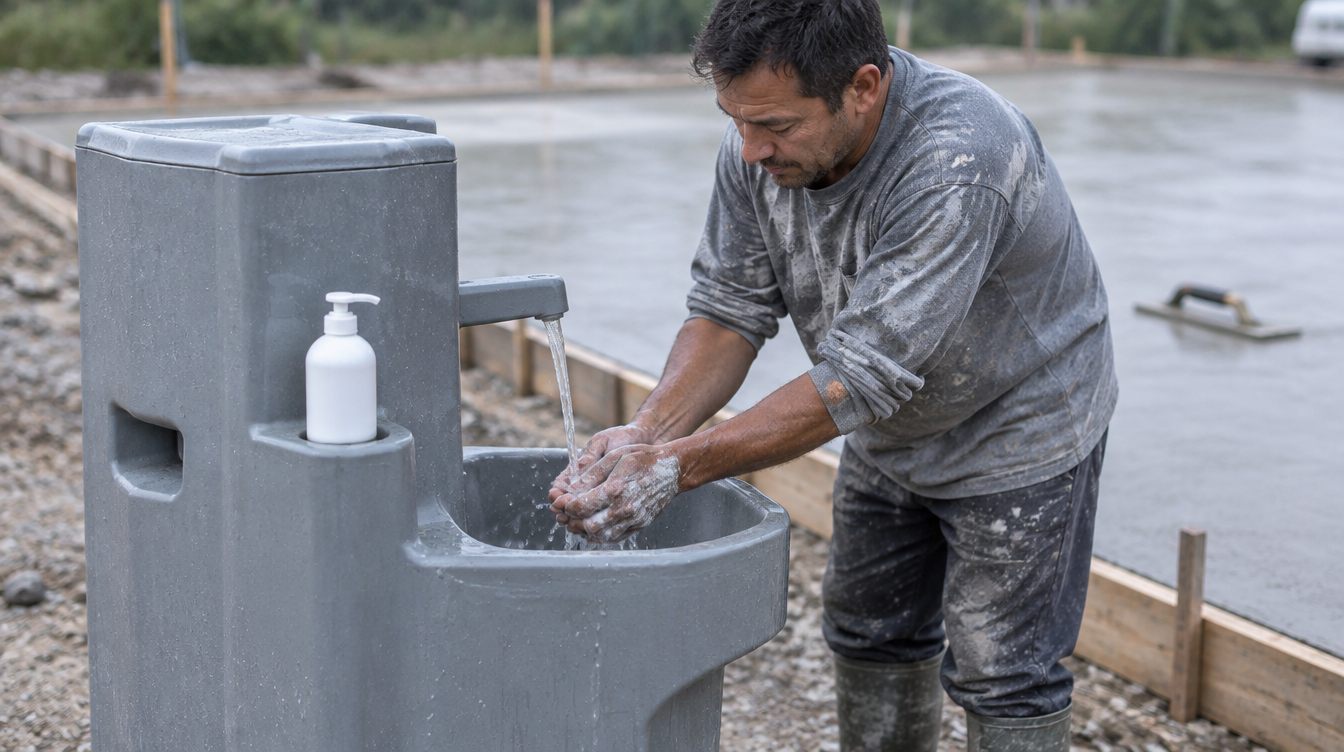
Concrete finishers, masons, form setters and laborers all know the feeling. You get through a pour, peel off your gloves, and your hands are gray, tight and sore. A week of that and the knuckles crack. Some guys get burns and don’t even know it was the cement.
Concrete on hands is more than a mess. Wet cement and jobsite grease are two of the hardest things your hands deal with on a build. Here’s what each does to skin, what to do on the shift, and how to clean up and care for your hands at the end of the day.
Wet cement is very alkaline. When portland cement mixes with water or with the sweat on your skin, it becomes caustic. Left on the skin, it works through the outer layer and can burn the living skin underneath. OSHA says skin contact with wet cement can cause cement burns and irritant or allergic dermatitis.
The tricky part is that a cement burn is easy to miss while you’re working, and it keeps getting worse as long as the cement stays on your skin. CPWR warns that these alkali burns can progress. The worst burns happen when cement gets trapped against the skin: inside a glove, down a boot, under a knee pad.
Cement can also cause allergy. CPWR warns that the chromium in cement can cause allergic contact dermatitis. Once you’re sensitized, even small amounts can set off a rash, and it can follow you for years.
It isn’t only the concrete crew. Operators and mechanics deal with grease and hydraulic fluid. Roofers deal with tar. Everyone deals with dirt. Most of it doesn’t wash off with plain water, so people reach for whatever is in the truck: gas, thinner, a harsh degreaser.
Those work on grime because they dissolve oil. They also dissolve your skin’s own oils, which is what keeps moisture in and irritants out. Strip that every day and your hands get dry, rough and cracked, and cracked skin lets more cement and grime in. It’s a loop.
No cream makes wet cement safe on bare skin. The first line of defense is the gear and the rinse.
Check your cement’s safety data sheet and your site’s PPE plan. They’ll tell you the first aid steps for that product.
At the wash station, you want something strong enough for jobsite grime that doesn’t rely on solvents. I.C. Heavy Duty Hand Cleaner is a pumice scrub that strips tar, oil, grease, carbon, sap and adhesives. It’s solvent-free, silicone-free and alcohol-free, and benzalkonium chloride kills 99.99% of germs. It has a light lemon scent.
How to use it:
No sink on the site? Keep I.C. Antibacterial Waterless Hand Cleaner in the truck. It removes tar, oil, grease and adhesives with no rinse: apply, scrub, towel off. It comes in single-use foil packs. Use it for grease and grime when there’s no water. For wet cement, rinse with clean water first. A waterless cleaner isn’t a substitute for getting the cement off.
Once your hands are clean and dry, put something on them. I.C. Advanced Repair Hand Cream is a dimethicone skin protectant (dimethicone 4%) that helps prevent and temporarily protects chafed, chapped or cracked skin. It’s fragrance-free.
Hand cream is for dry, chapped skin. It doesn’t treat a cement burn or a rash.
For more on what the jobsite does to skin, see our construction page and the construction Field Notes.
Wet cement is strongly alkaline, and it keeps working on the skin as long as it’s there. A burn can be easy to miss at first and get worse with time. Rinse with clean water right away, even if it feels fine.
No cream makes wet cement safe on bare skin. Waterproof gloves, the right clothing and a fast rinse come first.
Clean water first to get the cement off. OSHA expects non-alkaline soap at the wash station, and CPWR advises a pH-neutral soap or cleaner. Check your cleaner’s safety data sheet. Then a hand cleaner for grease and grime, and a hand cream on clean, dry hands.
Keep reading
What fume, soot and grinding dust leave on a welder's skin, what OSHA's chromium rule says about washing, and how to set up the…
Read article →Heat, sweaty gloves and heavy wash-ups crack a welder's hands. What to watch for, and a simple on-shift, end-of-shift and bedtime routine.
Read article →Why diesel and parts cleaner are the wrong soap, and how oilfield crews can get crude, mud and grease off at the sink or…
Read article →
Skin care that cares about the worker and about the work
Free samples for crews, safety managers and buyers. Buy direct, through your distributor or on GSA.

Welcome to the crew
Join our email list for your code, plus safety guides, new products and seasonal reminders. A few emails a month.
First order of $40 or more, one per customer. A few small sizes are excluded. Can't be combined with other codes. By signing up you agree to get marketing emails from R&R Lotion. Unsubscribe any time. Privacy Policy
You're on the list
Use it at checkout on your first order of $40 or more. We also sent a confirmation link to your inbox. Click it and we'll email the code so you have it for later.
Start shopping