



Hand & Skin Care
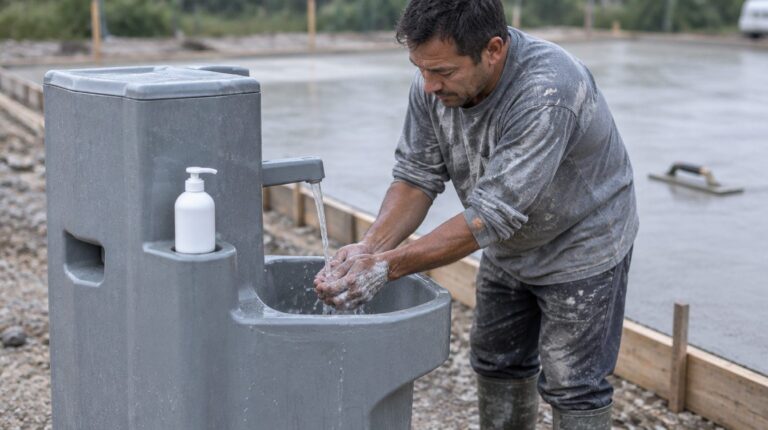
Wet Cement and Grease on Your Hands: Cleaning Up and Caring for Skin on the Jobsite
Wet cement is strongly alkaline and can burn skin. How to keep it off, clean up concrete on hands without solvents, and care for…
Read article → Shop the full professional line →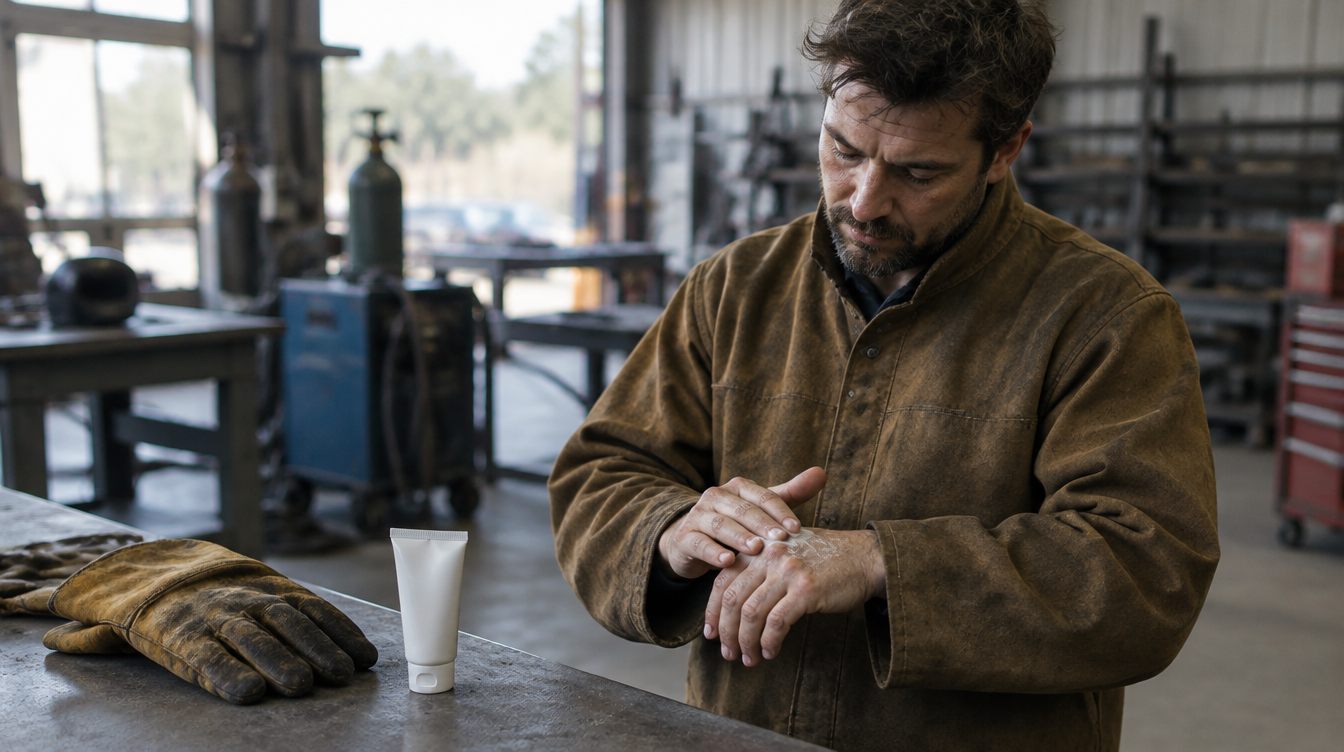
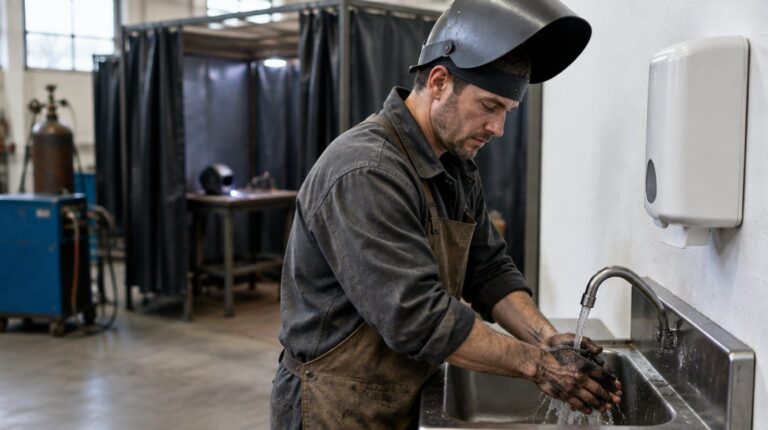
Ask a welder to show you their hands. You will see calluses, small burn marks, and splits at the fingertips and knuckles that sting every time they wash. Hot shops, sweaty leather gloves, heavy wash-ups and dry winter air all take a toll. Most welders just live with it.
You do not have to. This post covers what welding does to the skin on your hands, what to watch for, and a simple routine that keeps your hands working.
Your skin’s outer layer works like a wall. Skin cells are the bricks and natural oils are the mortar. When that layer stays intact, it holds water in and keeps a lot out. A welding shift attacks it from several sides:
NIOSH says contact dermatitis is the most common work-related skin disease, an estimated 90 to 95 percent of cases in the United States. It usually starts the way welders describe their hands: dry, red, rough and cracked.
Cracks are more than a nuisance. They are openings in the skin. Dirt and metal dust get in, and they are harder to keep clean. If a crack is deep, bleeds, oozes, or gets red, warm and swollen, see a clinician. Do the same if a rash keeps coming back.
The American Academy of Dermatology gives simple advice for hands that get washed a lot:
I.C. Advanced Repair Hand Cream is a skin protectant with dimethicone 4%. It helps prevent and temporarily protects chafed, chapped or cracked skin. It is fragrance-free.
Dimethicone is the active ingredient. As an ingredient, it forms a thin, water-resistant layer on the surface of the skin. That is what a skin protectant does: it puts a protective layer over chapped skin.
Use it after your end-of-shift wash and again before bed. On days off, use it a few times a day. That is when chapped hands have the best chance to settle down.
Your hands are one part of welding skin care. The arc also burns the neck, ears and wrists your hood and leathers miss. See our welders page and Field Notes: Welding and Arc UV for the full routine.
The best times are after your end-of-shift wash and before bed, when your hands get a long break. If you use it during the shift, use a thin layer and let it soak in before gloving up so your grip is not affected.
Cold, dry air pulls moisture out of skin, and shops with open bay doors are cold and dry. Add sweaty gloves and heavy wash-ups and the fingertips split. Moisturize after every wash and before bed, and keep your hands covered outside.
See a clinician if cracks are deep, bleed or ooze, if a crack or burn gets red, warm and swollen, or if a rash keeps coming back even with good care.
Keep reading
Wet cement is strongly alkaline and can burn skin. How to keep it off, clean up concrete on hands without solvents, and care for…
Read article →What fume, soot and grinding dust leave on a welder's skin, what OSHA's chromium rule says about washing, and how to set up the…
Read article →Why diesel and parts cleaner are the wrong soap, and how oilfield crews can get crude, mud and grease off at the sink or…
Read article →
Skin care that cares about the worker and about the work
Free samples for crews, safety managers and buyers. Buy direct, through your distributor or on GSA.

Welcome to the crew
Join our email list for your code, plus safety guides, new products and seasonal reminders. A few emails a month.
First order of $40 or more, one per customer. A few small sizes are excluded. Can't be combined with other codes. By signing up you agree to get marketing emails from R&R Lotion. Unsubscribe any time. Privacy Policy
You're on the list
Use it at checkout on your first order of $40 or more. We also sent a confirmation link to your inbox. Click it and we'll email the code so you have it for later.
Start shopping