
Hand Hygiene & Sanitizers
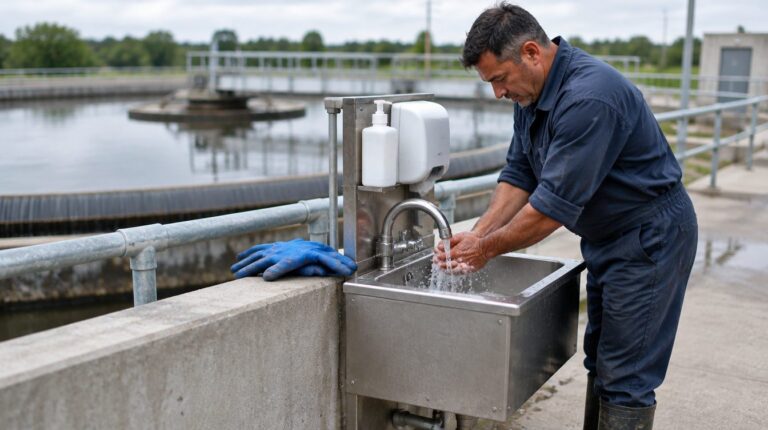
Sewage on Your Hands: CDC Hand Hygiene Steps for Wastewater Operators
The CDC's hand hygiene steps for workers who handle sewage, and how to follow them at the plant and out at lift stations with…
Read article → Shop the full professional line →
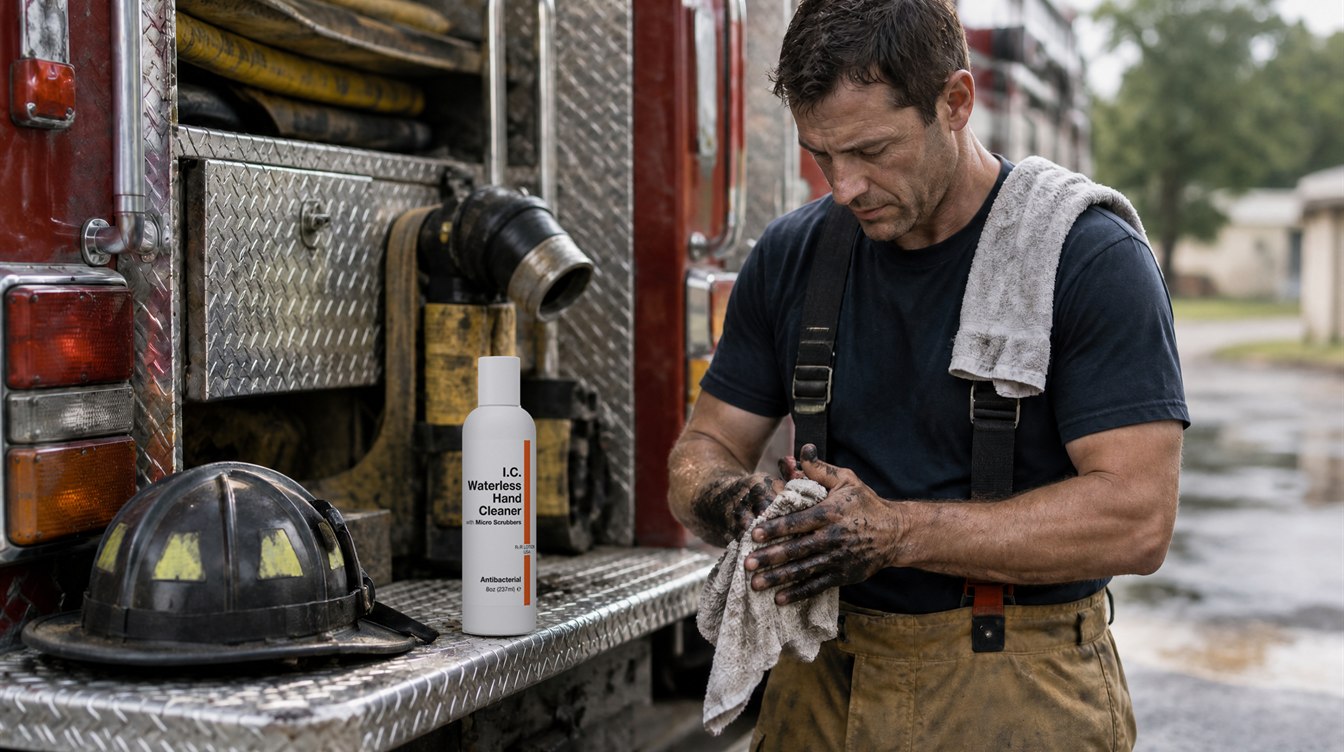
A rollover on the highway shoulder. A brush fire off a dirt road. A patient on a kitchen floor. EMS and fire crews do a lot of their work far from a sink, and they come back to the rig with whatever the call left on their hands: soot, road grime, grease, body fluids and dirt.
Then it’s back in the cab, hands on the steering wheel, the radio, the tablet, a granola bar. This post covers what’s on your hands after a call, what the rules say, and a cleanup routine for when the nearest sink is back at the station, built around a waterless hand cleaner EMS and fire crews can carry on the rig.
Soot and smoke residue. NIOSH says contaminants from a fire can move from your gear to your skin, other equipment and areas inside the station. Some of what’s in soot can be absorbed through the skin or swallowed if it’s on your hands when you eat.
Blood and body fluids. Gloves cut most of the contact, but gloves tear, and hands can get contaminated when you take gloves off.
Road grime and grease. Extrication, vehicle fluids, the jack, the tow strap. This stuff is oily, sticky and doesn’t come off with a wipe.
Dry, cracked skin. Gloves on and off all shift, hand rubs, cold weather and rough work wear the skin down. Cracked hands are harder to keep clean.
OSHA’s bloodborne pathogens standard sets the baseline for any job with exposure to blood or other potentially infectious materials:
In other words, a waterless cleaner gets you through until you reach a sink. It doesn’t replace soap and water.
CDC adds a practical point: hand sanitizer may not work as well when hands are visibly dirty or greasy. After a messy call, a pump of gel on sooty hands mostly moves the grime around. You need to get the dirt off first.
1. Gear off the right way. On fire calls, follow your department’s gross decon steps before you take your gear off. NIOSH recommends cleaning gear with soap or detergent and a brush before removing it, then cleaning your skin.
2. Gloves off, then hands. Peel gloves off inside-out without touching the outside with bare skin. Then clean your hands right away.
3. Get the grime off. For soot, grease and road dirt with no sink, use I.C. Antibacterial Waterless Hand Cleaner. It’s made for jobsites without water: apply, scrub, towel off. Pumice gives it scrub for tar, oil, grease, carbon and adhesives. It’s solvent-free and alcohol-free, and benzalkonium chloride kills 99.99% of germs. Work it over the backs of the hands, between the fingers and around the nails, then wipe off with a clean towel. Single-use foil packs fit in a jump bag or a turnout pocket.
4. Clean the face and neck. NIOSH advises skin cleansing wipes or soap and water to get contaminants off the skin before they’re absorbed. Neck, jaw and wrists pick up a lot after a fire.
5. Hands clean but no sink. Once the visible grime is off, use your department’s hand sanitizer. If you carry an alcohol-free option, I.C. Hand Sanitizing Cream uses benzalkonium chloride 0.13% to kill 99.99% of germs, with dimethicone 1.5% and shea and sunflower butters to help keep hands moisturized. It’s alcohol-free and non-flammable, which matters in a hot rig.
6. Wash at the station. Soap and running water as soon as you’re back. Before you eat, every time.
Hands that crack and bleed are hard to keep clean. After your last wash of the shift, put on a hand cream. I.C. Advanced Repair Hand Cream is a dimethicone skin protectant that helps prevent and temporarily protects chafed, chapped or cracked skin. Use it when you’re off the truck or at the end of the shift, so it has time to soak in before your next glove change.
For more on hand care for crews in the field, see our first responders page.
No. OSHA allows an antiseptic hand cleanser and towels when there’s no sink, but you still need to wash with soap and running water as soon as feasible. After skin contact with blood or body fluids, wash with soap and water and follow your exposure control plan.
CDC says sanitizer may not work as well when hands are visibly dirty or greasy. Get the grime off first, then sanitize.
Yes. NIOSH says contaminants can transfer from gear to skin, especially while you take gear off. Clean your skin with wipes or soap and water as soon as you can and wash your hands before eating.
Keep reading
The CDC's hand hygiene steps for workers who handle sewage, and how to follow them at the plant and out at lift stations with…
Read article →A hand hygiene routine for vets, techs and kennel staff built on the NASPHV Compendium: when to wash, gloves, rubs and keeping skin intact.
Read article →Soap and water come first for most of the school day. When kids should wash, when sanitizer is fine, and how to make both…
Read article →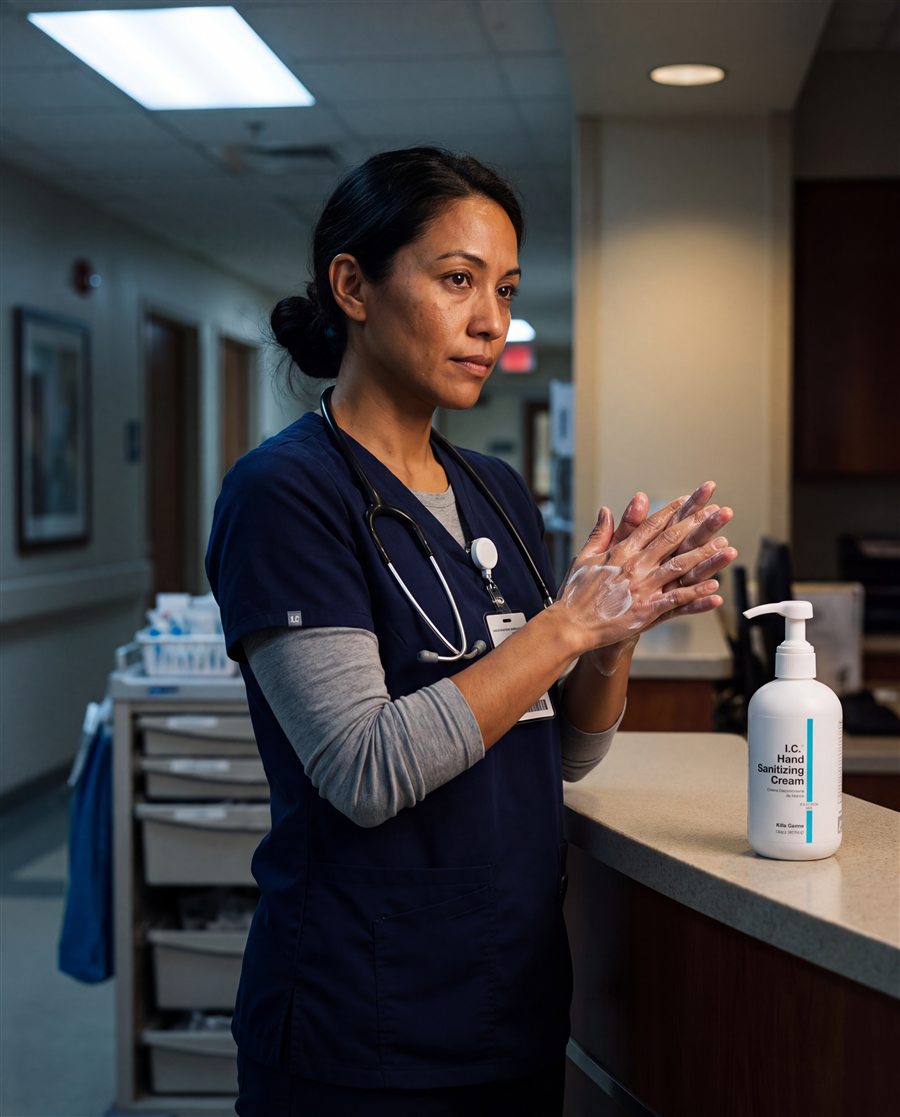
Skin care that cares about the worker and about the work
Free samples for crews, safety managers and buyers. Buy direct, through your distributor or on GSA.
Each tier you reach gives you more. Open one to see what it unlocks.
See what it takes to reach each tier.
Highest tier
Each tier you reach gives you more. Open one to see what it unlocks.
See what it takes to reach each tier.
Highest tier

Welcome to the crew
Join our email list for your code, plus safety guides, new products and seasonal reminders. A few emails a month.
First order of $40 or more, one per customer. A few small sizes are excluded. Can't be combined with other codes. By signing up you agree to get marketing emails from R&R Lotion. Unsubscribe any time. Privacy Policy
You're on the list
Use it at checkout on your first order of $40 or more. We also sent a confirmation link to your inbox. Click it and we'll email the code so you have it for later.
Start shopping