






ESD & Static Control
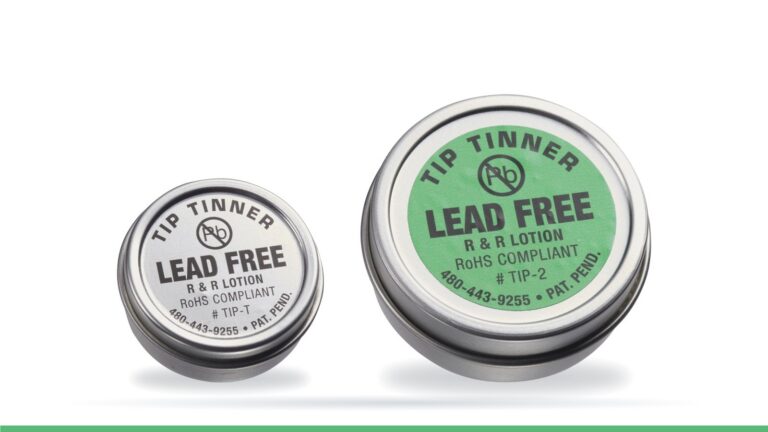
How to Keep a Soldering Tip Clean and Make It Last
Why tips go black, the daily habits that make them last, and how to bring a tip back with tinner.
Read article → Shop the full professional line →

Short answer: A static-safe workbench grounds everything it can: the work surface, the person and the tools. Insulators that can’t be grounded are removed or treated, and liquids go in ESD-safe containers. ANSI/ESD S20.20 is the program standard most companies follow.
These products support an ANSI/ESD S20.20 program. No single product certifies a workstation.
Keep reading
Why tips go black, the daily habits that make them last, and how to bring a tip back with tinner.
Read article →How to Manage Static Electricity During Winter with R&R Lotion Products By: Richard Rich Static electricity becomes especially troublesome during winter due to dry…
Read article →A Guide to Maintaining a Static-Free Environment in 2024 with R&R Lotion Products By: Richard Rich As we move into 2024, the challenge of…
Read article →
Skin care that cares about the worker and about the work
Free samples for crews, safety managers and buyers. Buy direct, through your distributor or on GSA.
Each tier you reach gives you more. Open one to see what it unlocks.
See what it takes to reach each tier.
Highest tier
Each tier you reach gives you more. Open one to see what it unlocks.
See what it takes to reach each tier.
Highest tier

Welcome to the crew
Join our email list for your code, plus safety guides, new products and seasonal reminders. A few emails a month.
First order of $40 or more, one per customer. A few small sizes are excluded. Can't be combined with other codes. By signing up you agree to get marketing emails from R&R Lotion. Unsubscribe any time. Privacy Policy
You're on the list
Use it at checkout on your first order of $40 or more. We also sent a confirmation link to your inbox. Click it and we'll email the code so you have it for later.
Start shopping