

Hand Hygiene & Sanitizers
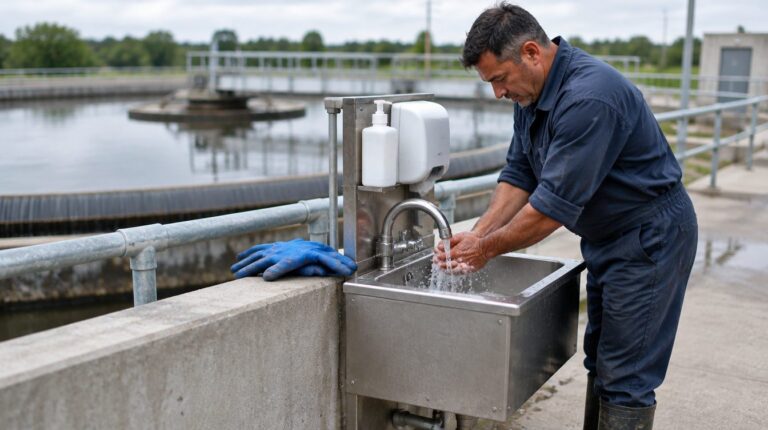
Sewage on Your Hands: CDC Hand Hygiene Steps for Wastewater Operators
The CDC's hand hygiene steps for workers who handle sewage, and how to follow them at the plant and out at lift stations with…
Read article → Shop the full professional line →
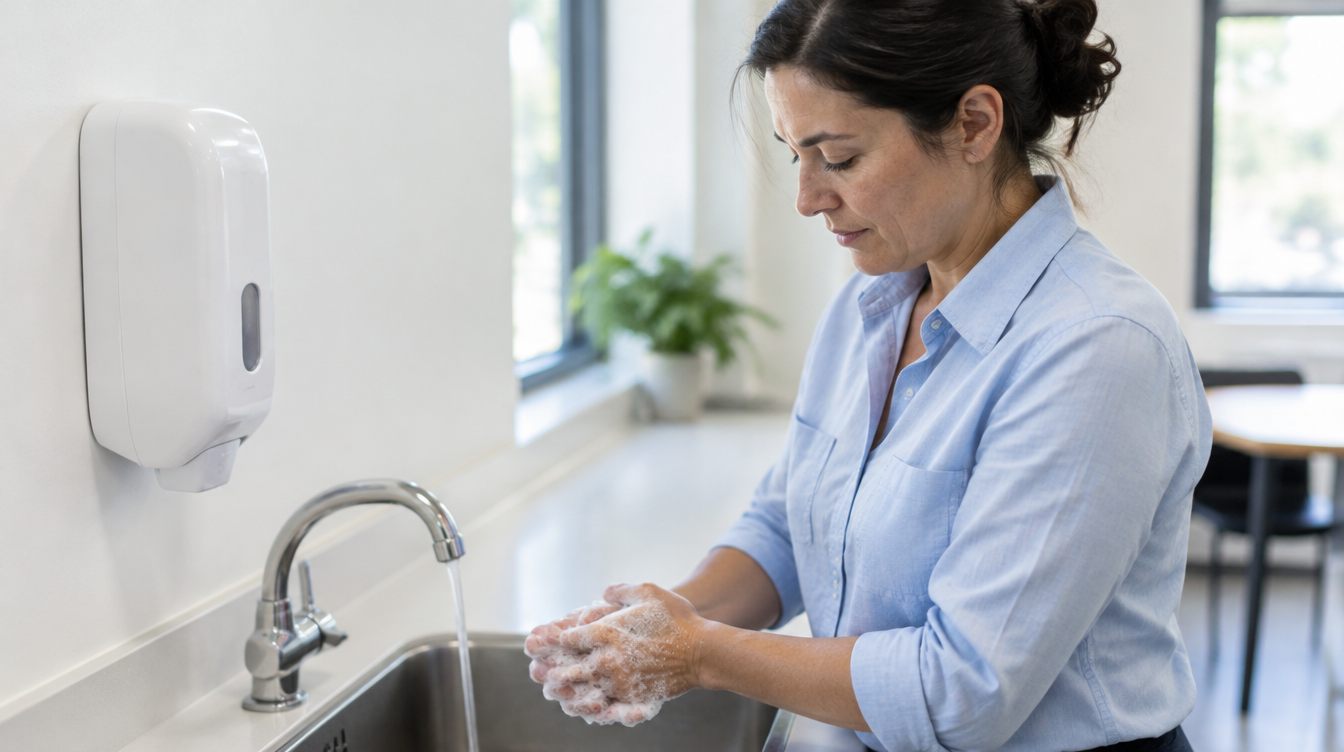
Most people think they wash their hands at work. Watch a restroom for an hour and you will see something else. A quick rinse. No soap. A wet hand on the door handle on the way out. Then that same hand goes into the shared snack bowl in the break room.
This post is for office managers, facility leads and whoever keeps the supply closet stocked. It covers when people should wash, how to do it right in about 20 seconds, and how to set up the sinks and the break room so washing is the easy choice.
An office runs on shared surfaces. Faucet handles, paper towel levers, the coffee pot, the fridge door, the microwave buttons. Everyone touches them. A big share of the day’s germs passes through two rooms: the restroom and the break room.
Handwashing works. The CDC says it cuts the number of people who get sick with diarrhea by 23 to 40 percent. It cuts colds and other respiratory illness in the general population by 16 to 21 percent. That is a lot of sick days saved by a small habit.
The habit is the hard part. The CDC estimates that worldwide, only about 19 percent of people wash their hands after using the toilet. Your office probably does better than that. It probably does not do as well as you think.
The CDC lists key times to wash hands. These are the ones that come up in an office:
Shared gear is not on the CDC list by name. Still, after the conference-room remote, a shared keyboard or the copier, clean hands are a good idea before you eat or touch your face.
The CDC’s steps are short:
Most people skip the scrub. They lather for five seconds and rinse. The 20 seconds is where the soap does its work, so that is the part to coach.
You cannot make adults wash. You can make it easy and pleasant. A few things help:
We built the I.C. Antibacterial Hand Cleaner for this spot. It uses benzalkonium chloride (BZK) and kills 99.99% of germs. It has no harsh solvents and no drying alcohol, and it is fragrance free. It is NSF registered (E2), which is handy if your break room doubles as a kitchen.
Pair it with a 32 oz refillable wall dispenser, automatic or manual. It has a level window, so whoever checks the restroom can see at a glance when it needs a refill. A hidden lock keeps it from walking off.
Be straight with your team about what the science says. The CDC says soap and water is the best option in most situations. When soap and water are not handy, the CDC’s backup is an alcohol-based hand sanitizer with at least 60 percent alcohol.
The CDC also says sanitizer may not work as well when hands are visibly dirty or greasy. So in the break room, the sink comes first. Sanitizer is for the times you cannot get to one: back at your desk, after the elevator, after a shared keyboard.
Some offices choose an alcohol-free sanitizer for those spots. The reasons are practical. Alcohol rubs are flammable, so big stocks run into fire-code storage limits. Some people find alcohol drying and stop using it. Some workplaces simply do not want alcohol on the shelf.
If that is you, the I.C. Alcohol-Free Foaming Hand Sanitizer uses BZK instead of alcohol. It kills 99.99% of germs in as little as 15 seconds. It is non-flammable, fragrance free and quick drying, and it is NSF registered (E3). It is a backup to washing, not a replacement for it.
Washing is one part of the picture. Shared desks, keyboards and phones need a routine too. Our office hand hygiene page covers the full setup, and Field Notes: Office shows how germs travel from one door handle to half the floor.
Yes. The CDC says soap and water is the best option in most situations, and sanitizer may not work as well on dirty or greasy hands. Put sanitizer where there is no sink. Keep soap at every sink.
No. When soap and water are not available, the CDC recommends a sanitizer with at least 60 percent alcohol. Offices that pick alcohol-free foam usually do it for fire-code, storage or skin-comfort reasons. Either way, washing comes first.
No. The scrub matters with any soap. Lather the backs of the hands, between the fingers and under the nails, and keep going for 20 seconds before you rinse.
Keep reading
The CDC's hand hygiene steps for workers who handle sewage, and how to follow them at the plant and out at lift stations with…
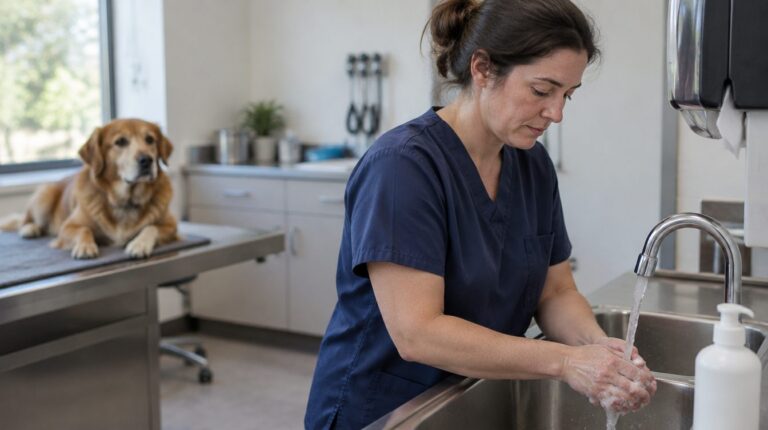
Read article →A hand hygiene routine for vets, techs and kennel staff built on the NASPHV Compendium: when to wash, gloves, rubs and keeping skin intact.
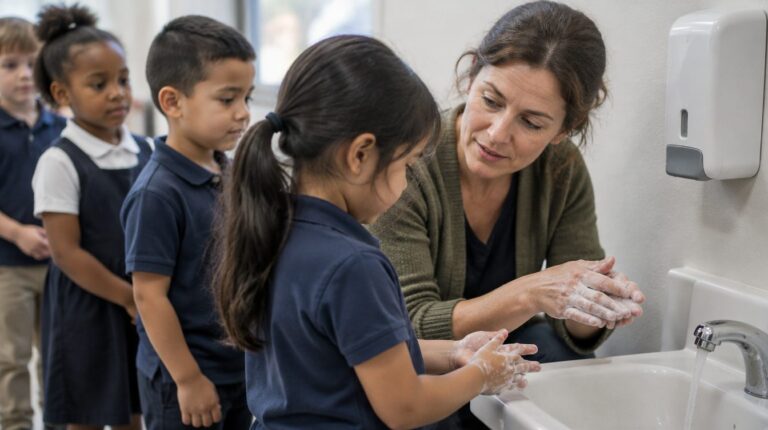
Read article →Soap and water come first for most of the school day. When kids should wash, when sanitizer is fine, and how to make both…
Read article →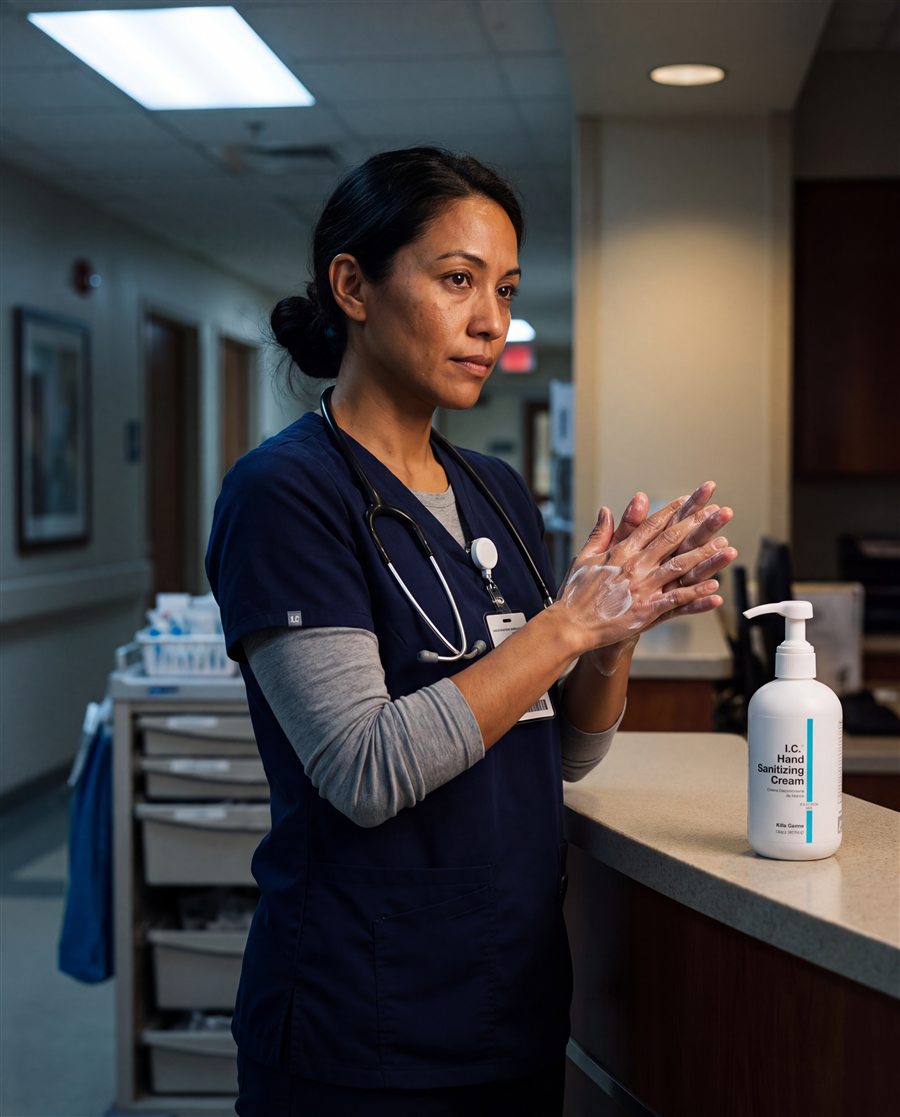
Skin care that cares about the worker and about the work
Free samples for crews, safety managers and buyers. Buy direct, through your distributor or on GSA.
Each tier you reach gives you more. Open one to see what it unlocks.
See what it takes to reach each tier.
Highest tier
Each tier you reach gives you more. Open one to see what it unlocks.
See what it takes to reach each tier.
Highest tier

Welcome to the crew
Join our email list for your code, plus safety guides, new products and seasonal reminders. A few emails a month.
First order of $40 or more, one per customer. A few small sizes are excluded. Can't be combined with other codes. By signing up you agree to get marketing emails from R&R Lotion. Unsubscribe any time. Privacy Policy
You're on the list
Use it at checkout on your first order of $40 or more. We also sent a confirmation link to your inbox. Click it and we'll email the code so you have it for later.
Start shopping