




Hand Hygiene & Sanitizers
Sewage on Your Hands: CDC Hand Hygiene Steps for Wastewater Operators
The CDC's hand hygiene steps for workers who handle sewage, and how to follow them at the plant and out at lift stations with…
Read article → Shop the full professional line →
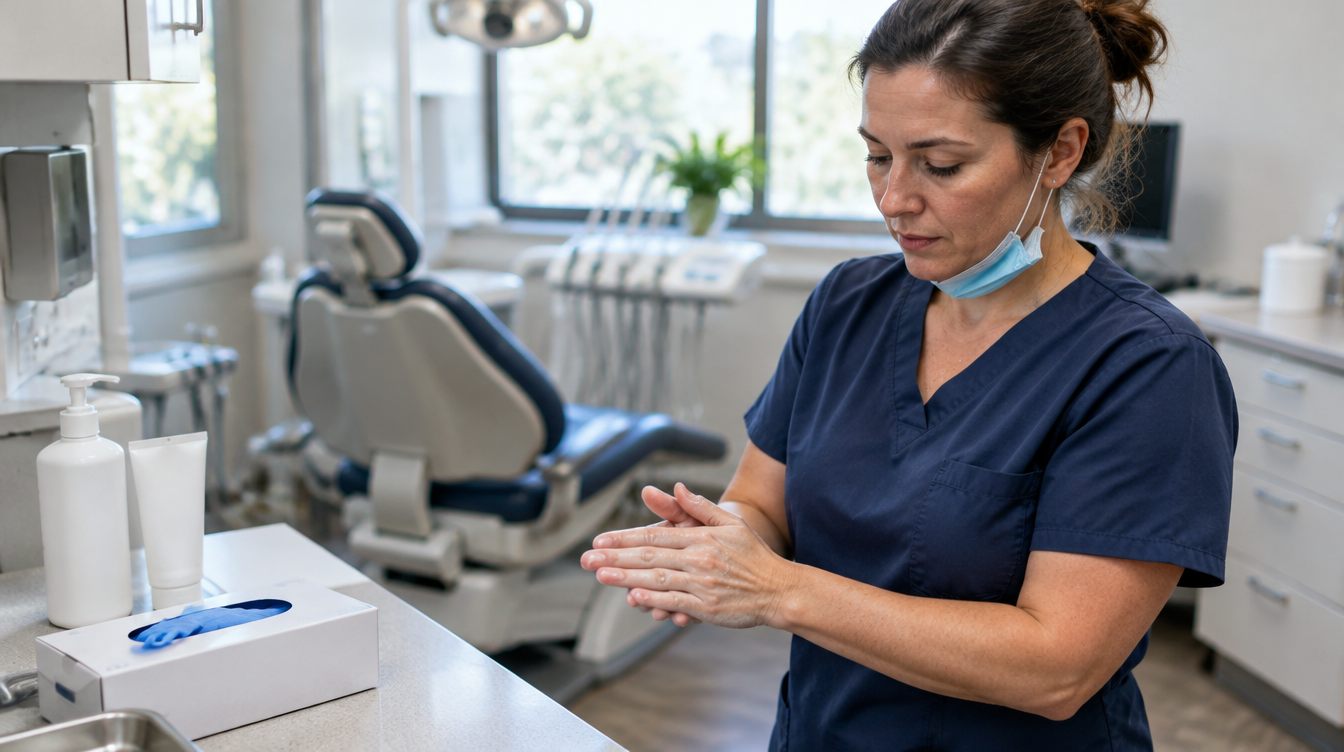
In a dental office, hand hygiene isn’t one big moment. It’s dozens of small ones. Seat the patient, clean hands, glove up. Finish, gloves off, clean hands. Chart, adjust the light, answer the phone, next patient, and around again.
Most hygienists and assistants have the routine down. The hard part is keeping it up on a full schedule without your hands falling apart by Thursday. This post lays out CDC’s dental hand hygiene steps in plain terms and a routine that’s easy on your skin.
CDC’s dental infection control guidance calls for hand hygiene at these moments:
Gloves don’t replace hand hygiene. CDC points out that gloves can have tiny defects you can’t see, they can tear during a procedure, and your hands can pick up germs as you take them off. And germs multiply fast in the warm, moist space under a glove. So hands get cleaned before gloves go on, and again as soon as they come off.
For routine exams and non-surgical procedures, CDC lists three options: plain soap and water, an antimicrobial soap, or an alcohol-based hand rub. When hands are visibly soiled with blood, saliva or debris, use soap and water.
To be clear about what CDC says: its guidance names alcohol-based hand rubs as the waterless option, and CDC’s general advice is that a hand sanitizer should have at least 60% alcohol. Many practices still keep an alcohol-free option on hand for staff whose skin can’t take alcohol many times a day. If your office does, make sure it fits your written infection control plan.
At the sink. When hands are soiled, and at the start and end of the day, wash. I.C. Antibacterial Hand Cleaner is a gentle, fragrance-free hand cleaner. Its active ingredient is benzalkonium chloride. It has no soap, silicone, lanolin or mineral oil and no harsh solvents. Wet hands, lather for at least 20 seconds, rinse, and pat dry with a paper towel. Make sure hands are fully dry before you glove. Damp hands are hard to glove and trap moisture under the glove.
Between patients without a sink. Your practice may use an alcohol-based rub here. If your plan includes an alcohol-free option, I.C. Hand Sanitizing Cream uses benzalkonium chloride 0.13% to kill 99.99% of germs, with no alcohol. Dimethicone 1.5% and shea and sunflower butters help keep hands moisturized while you sanitize. It’s dermatologist tested: a 50-subject patch test with zero reactions (ALS / BioScreen, Study 22-522A, 2022). Rub it over all surfaces of your hands until dry.
Before you glove, if your hands need it. CDC recommends hand lotion to prevent the dryness that comes with frequent hand hygiene. It also warns that petroleum-based lotions can weaken latex gloves, so oil-based products belong at the end of the day. During the workday, CDC’s training says to pick a water-based lotion and check with the maker about how it works with your gloves and products. I.C. Lotion, Fragrance Free has a purified DI water base and no silicones, lanolin, glycerin, mineral oils, fragrance or dye. It’s made for use before nitrile, latex or vinyl gloves and dries with no oily residue. Let it dry completely before you glove.
Dry, tight hands after a long day are common. Watch for redness, itching, flaking or cracks that don’t settle down over a weekend. Cracked skin is harder to keep clean, and it’s harder to glove over. If your hands get worse, or you think you’re reacting to gloves or a product, talk to your office manager about options and see a clinician. Don’t just push through.
For more on what a day of patients does to your hands, visit our dentistry page.
Yes. CDC says to clean your hands right after taking gloves off. Gloves can have tiny holes, and hands can get contaminated as you remove them.
No. CDC’s dental guidance names alcohol-based hand rubs as the waterless option. An alcohol-free sanitizer such as I.C. Hand Sanitizing Cream kills 99.99% of germs with benzalkonium chloride and is gentler for some staff, but it should be used only as your written infection control plan allows.
Yes, if it’s the right kind. CDC says to use a water-based lotion during the workday and save oil-based products for the end of the day. Check with the lotion maker about compatibility with your gloves.
Keep reading
The CDC's hand hygiene steps for workers who handle sewage, and how to follow them at the plant and out at lift stations with…
Read article →A hand hygiene routine for vets, techs and kennel staff built on the NASPHV Compendium: when to wash, gloves, rubs and keeping skin intact.
Read article →Soap and water come first for most of the school day. When kids should wash, when sanitizer is fine, and how to make both…
Read article →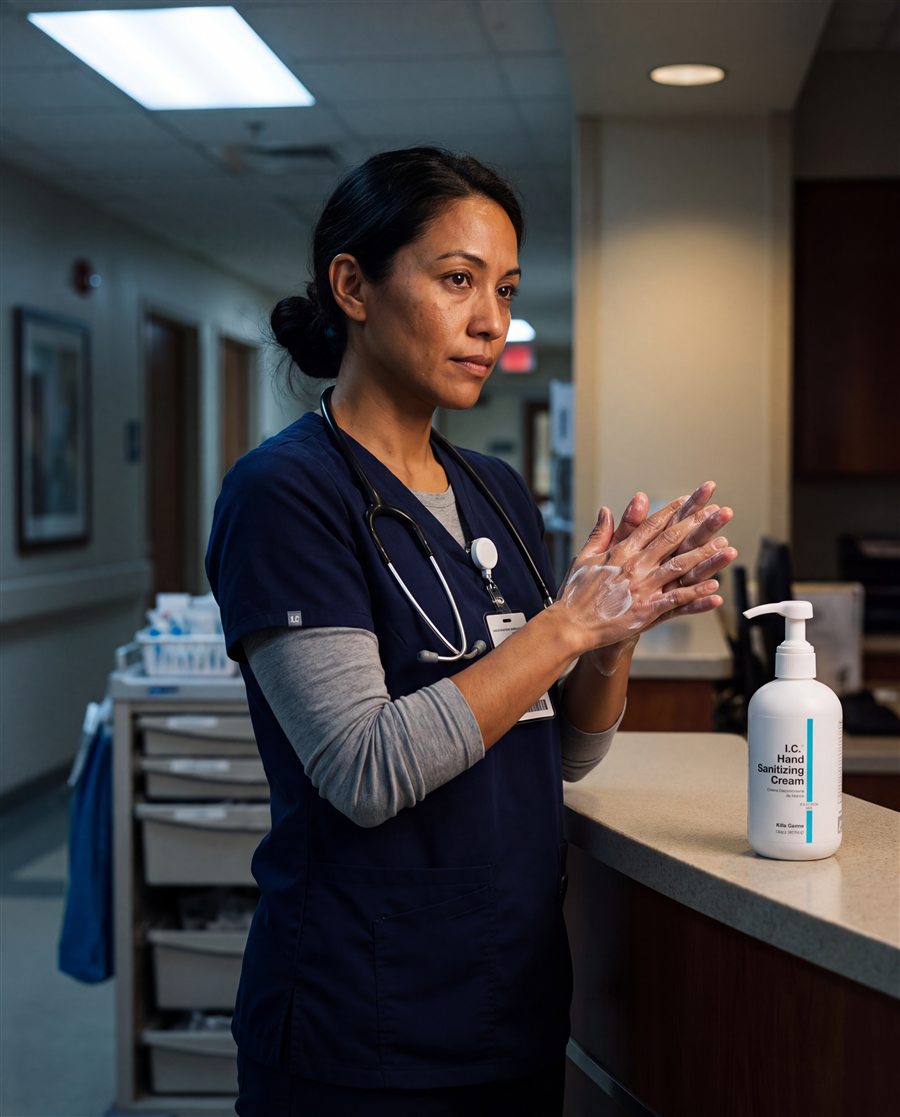
Skin care that cares about the worker and about the work
Free samples for crews, safety managers and buyers. Buy direct, through your distributor or on GSA.
Each tier you reach gives you more. Open one to see what it unlocks.
See what it takes to reach each tier.
Highest tier
Each tier you reach gives you more. Open one to see what it unlocks.
See what it takes to reach each tier.
Highest tier

Welcome to the crew
Join our email list for your code, plus safety guides, new products and seasonal reminders. A few emails a month.
First order of $40 or more, one per customer. A few small sizes are excluded. Can't be combined with other codes. By signing up you agree to get marketing emails from R&R Lotion. Unsubscribe any time. Privacy Policy
You're on the list
Use it at checkout on your first order of $40 or more. We also sent a confirmation link to your inbox. Click it and we'll email the code so you have it for later.
Start shopping